


 简体中文
简体中文 English
 русский
 Español
 Français
 عربى
عربى Português
 日本語
日本語 italiano
 Nederlands
 Polskie
Content
Why Gas Pipework Demands More Than Standard Plastic Pipe
A gas pipeline is not the place to discover that your pipe material was chosen on price alone. Gas distribution systems—whether in residential buildings, commercial facilities, or industrial plants—operate under a set of conditions that expose every weakness in an underspecified material: sustained pressure, temperature cycling, long service intervals between inspections, and zero tolerance for leakage. A small-bore water pipe that starts to weep at a joint is an inconvenience. The same failure in a gas line is a safety incident.
Standard PPR (polypropylene random copolymer) pipe has long served well in hot and cold water systems. But gas pipework brings additional demands that push standard PPR to its limits: higher sustained operating pressures, wider temperature variation over the life of the system, and the need for long-term creep resistance—the ability to maintain structural integrity under constant stress for decades without gradual deformation. These are exactly the conditions that drove the development of PP-RCT, a next-generation polypropylene material engineered specifically to close those gaps.
What Is PP-RCT and How Does It Differ from Standard PPR
PP-RCT stands for Polypropylene Random Copolymer with Modified Crystallinity and Temperature Resistance. The name describes the core innovation: through a special nucleation process during manufacturing, the crystalline structure of the polypropylene is modified to include beta-phase crystallinity alongside the standard alpha phase. This structural change at the molecular level is what separates PP-RCT from its predecessor.
Standard PP-R has alpha-phase crystallinity. When heat and pressure are applied over time, the aligned molecular chains in this structure create zones of relative weakness—points where creep and deformation can begin. The randomized beta-phase crystallinity in PP-RCT staggers these molecular boundaries, significantly increasing the material's ability to resist long-term stress at elevated temperatures. According to the Plastics Pipe Institute's technical guidance on PP-R and PP-RCT pressure piping system standards and definitions, PP-RCT represents a newer generation of PP-R material with higher long-term strength at elevated temperatures than earlier resins.
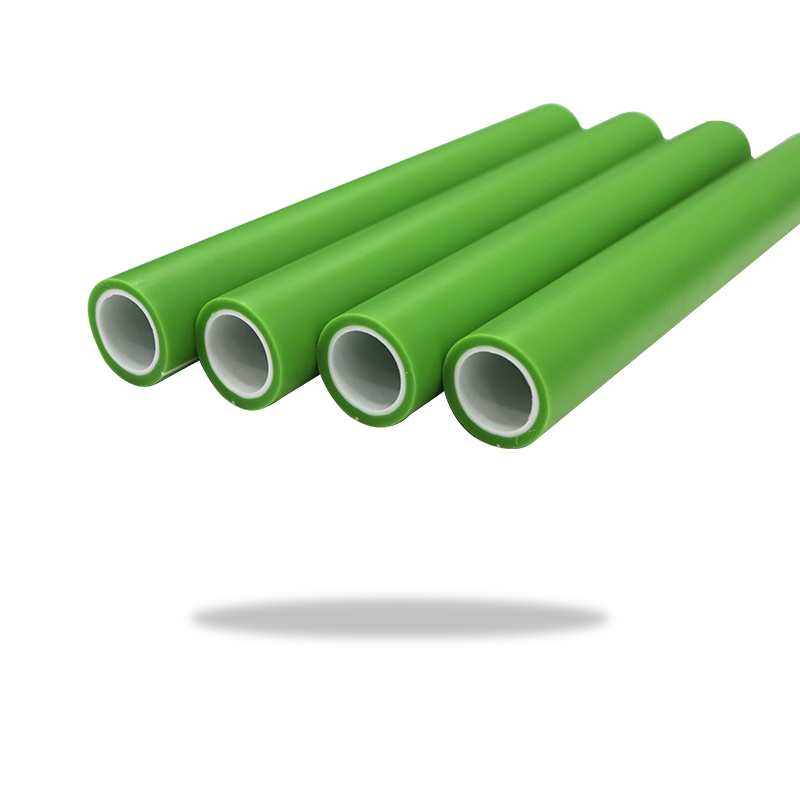
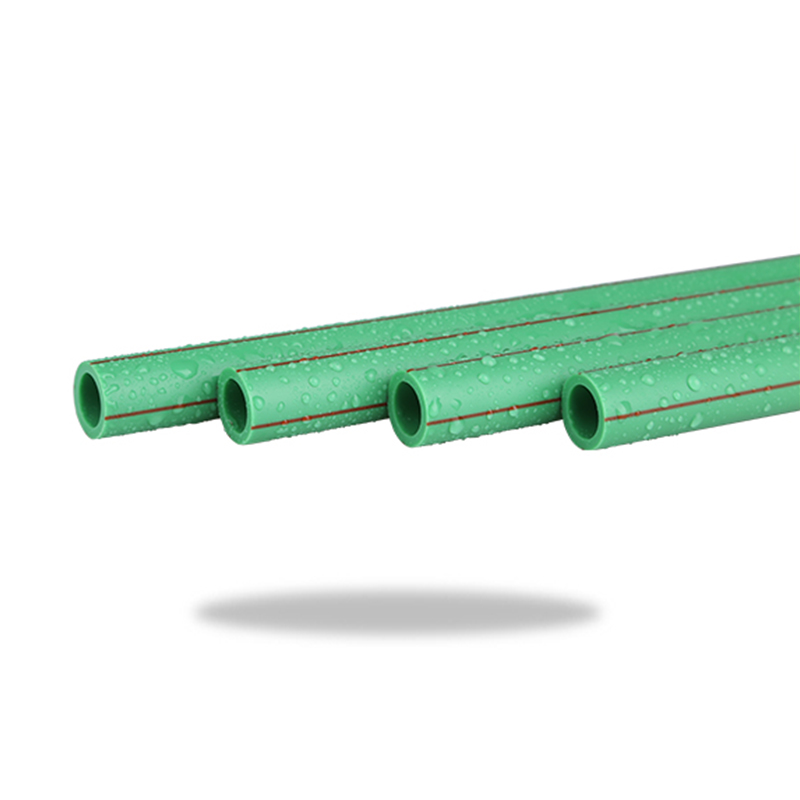
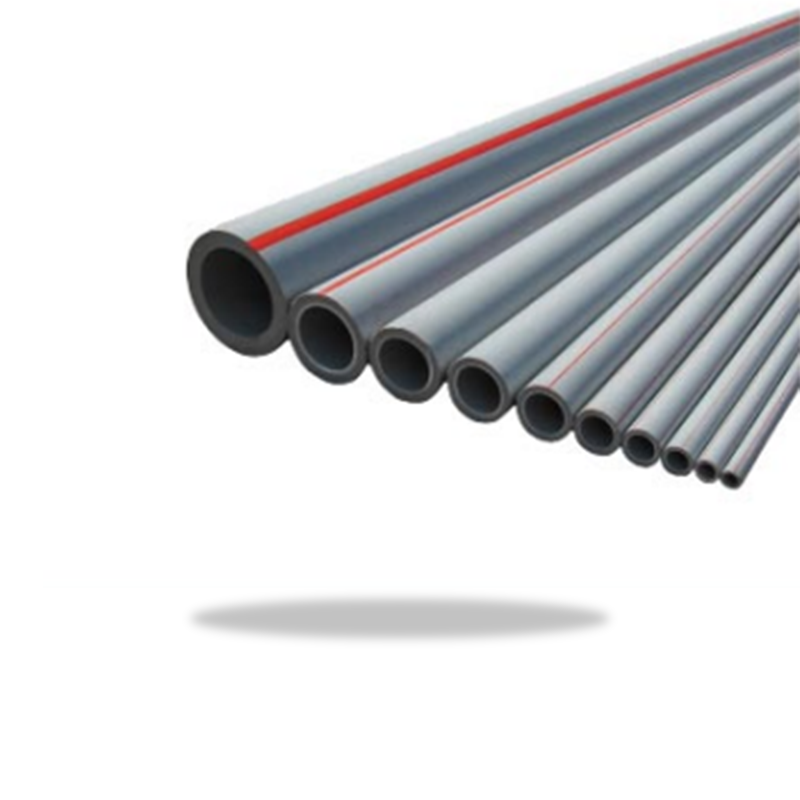
In practical terms, the difference is substantial. PP-RCT delivers approximately 50% higher pressure resistance compared to standard PPR pipe of the same wall thickness at equivalent operating temperatures. Continuous operating capability reaches 95°C, well above the 70°C ceiling of standard PPR. For gas pipework, where the pipe may be exposed to heat from surrounding infrastructure or operated under elevated working pressures, this margin is not a luxury—it is a reliability requirement. Our PP-RCT pipe with 50% higher pressure resistance at elevated temperatures is manufactured to ISO 15874 and DIN 8077/8078 standards using 100% virgin Borealis raw material, with pressure ratings from PN12.5 to PN25 across diameters from 20mm to 160mm.
PP-RCT in Gas Pipework: Key Performance Advantages
Four properties make PP-RCT a strong candidate for gas distribution pipework, and each addresses a specific failure mode that engineers designing gas systems need to account for.
Sustained pressure resistance under thermal stress. Gas pipelines in building services environments are rarely at constant temperature. Pipes routed near heating plant, exposed in plant rooms, or buried in ground subject to seasonal temperature variation will cycle between temperature extremes over their service life. PP-RCT's enhanced crystalline structure maintains pressure integrity across this range—rated for a working life of 50 years at 70°C under 1 MPa pressure, and tested to withstand 3.5 MPa for 1,000 hours at 95°C without cracking or leakage.
Creep resistance for long service intervals. Creep—the slow, permanent deformation of a material under sustained stress—is the primary long-term failure mechanism in plastic pressure pipe. In a gas system that may not be fully accessed for 20 or 30 years after installation, creep resistance determines whether a pipe is still performing to specification decades down the line. PP-RCT's modified crystallinity directly addresses this: the beta-phase structure resists the gradual molecular realignment that causes creep in standard thermoplastics under sustained load.
Corrosion immunity across the full service life. Steel and copper gas pipework corrodes. In underground installations, soil chemistry attacks metal surfaces; in above-ground plant, atmospheric moisture and condensation contribute to surface degradation over time. PP-RCT is completely inert to these mechanisms—it does not rust, scale, pit, or react with the trace moisture content present in most gas distribution systems. A PP-RCT gas pipe installed today will have the same internal bore diameter in 50 years that it had when commissioned.
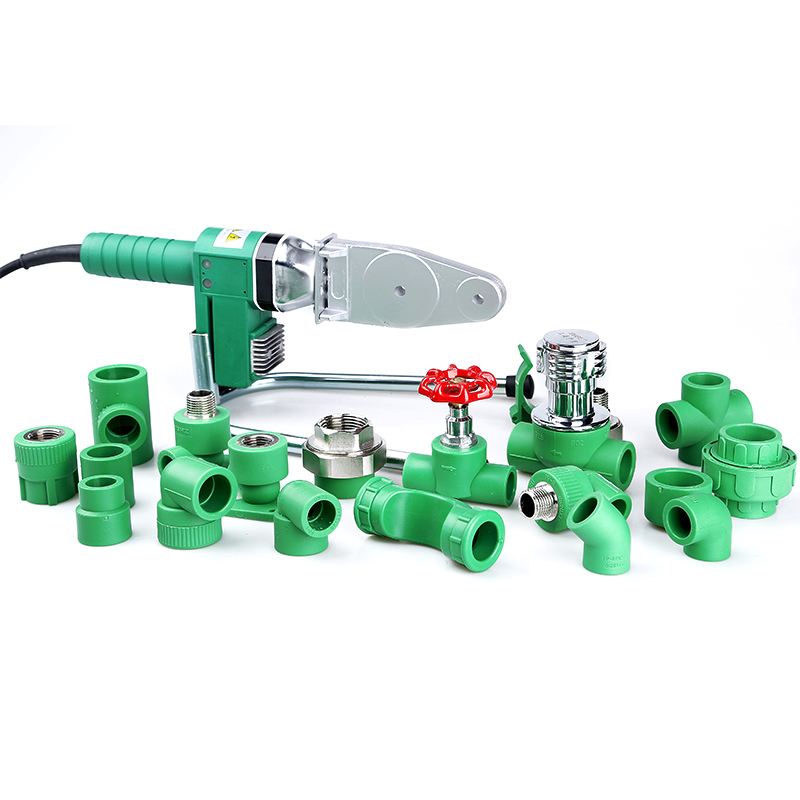
Leak-free heat fusion jointing. Every joint in a gas system is a potential leak point. PP-RCT uses socket fusion jointing, where the pipe and fitting surfaces are heated to approximately 260°C and pressed together to form a homogeneous molecular bond—not a mechanical seal, not a compression fitting, but a continuous section of the same material. When done correctly, a heat fusion joint in PP-RCT is stronger than the pipe wall itself. For gas pipework, where even the smallest leak represents an unacceptable risk, this jointing method is a decisive advantage over threaded or push-fit alternatives. Our complete range of PPR pipe products for pressure and temperature-demanding systems is designed as a fully integrated system—pipes and fittings from the same manufacturer, with matched fusion specifications.
| Property | PP-RCT Performance | Relevance to Gas Pipework |
|---|---|---|
| Max. continuous operating temperature | 95°C | Handles heat from adjacent plant and building services |
| Working life at 70°C / 1 MPa | 50 years | Matches or exceeds building service life expectations |
| Pressure uplift vs. standard PPR | +50% at same wall thickness | Enables thinner-walled pipe or higher pressure ratings |
| Hydrostatic test: 3.5 MPa at 95°C | 1,000 hours, no failure | Demonstrated long-term integrity under extreme conditions |
| Jointing method | Heat fusion (socket or butt) | Creates homogeneous, leak-free connections |
| Corrosion resistance | Full (chemically inert) | No degradation from soil chemistry or atmospheric exposure |
PP-RCT vs Metal Pipe: A Practical Comparison for Gas Systems
Steel and copper have dominated gas pipework for decades, and they remain the default specification in many markets. For engineers and procurement teams evaluating alternatives, the comparison needs to address the practical realities of installation, total cost, and long-term maintenance—not just material properties in isolation.
Installation cost and speed. Steel gas pipe requires skilled welders or certified pipefitters, specialized cutting and threading equipment, and careful handling to avoid surface damage that accelerates corrosion. PP-RCT jointing requires a heat fusion tool and a trained operative—a significantly lower barrier in terms of equipment, skill certification, and time on site. On a typical commercial project, PP-RCT installation runs faster than equivalent steel pipework, with fewer specialist contractors required.
Weight and logistics. PP-RCT pipe weighs roughly one-eighth of steel pipe at equivalent diameter. On large projects, this translates directly to reduced lifting equipment requirements, lower structural loading where pipes are suspended from building fabric, and simpler logistics from delivery to final position. In retrofit and refurbishment projects where access is constrained, this weight advantage is frequently decisive.
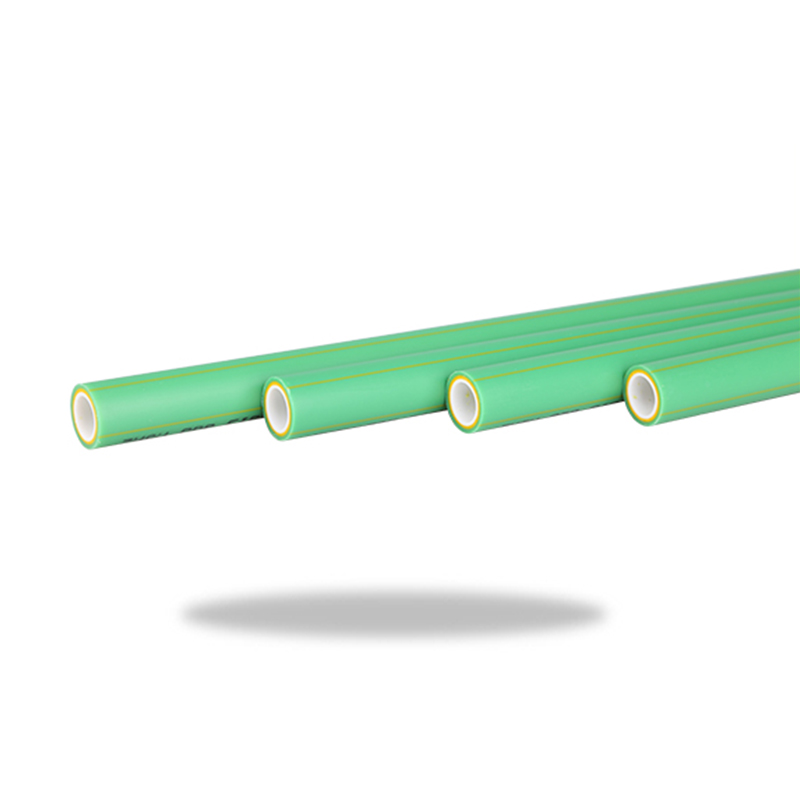
Long-term corrosion management. Steel gas pipe in aggressive environments—particularly underground or in humid plant rooms—requires ongoing inspection, cathodic protection, or coating maintenance to manage corrosion risk over its service life. PP-RCT eliminates this maintenance burden entirely. The material's immunity to electrochemical corrosion and chemical attack means that the inspection and maintenance program for a PP-RCT gas system focuses on joints and supports rather than pipe wall integrity. For projects where through-life cost matters as much as first cost, this is a significant factor. Our PPR fiber composite pipe for reinforced piping applications extends this principle further, incorporating glass fiber reinforcement to minimize thermal expansion in systems with wide temperature variation.
Flow efficiency. The smooth internal bore of PP-RCT pipe produces lower friction losses than equivalent steel pipework, which develops internal roughness through corrosion and scale over time. For gas distribution systems sized to deliver specific flow rates, this characteristic means either smaller pipe diameter for the same flow, or reduced pressure drop over the system's lifetime compared to steel alternatives.
Selecting the Right PP-RCT Pipe Specification for Your Project
PP-RCT pipe is available in a range of wall thicknesses and pressure ratings, and specifying correctly for a gas application requires attention to three variables: operating pressure, operating temperature, and required service life. Getting this combination right is straightforward once the parameters are understood.
Pressure rating (PN) selection. PP-RCT pipe is classified by pressure nominal (PN) rating: PN12.5, PN16, PN20, and PN25. These ratings represent the maximum permissible operating pressure in bar at 20°C. For gas pipework, where operating pressures are typically in the range of 0.5–4 bar for building distribution systems, PN16 or PN20 is the most common specification. Higher-pressure distribution mains may require PN25. The wall thickness increases with PN rating, so specifying higher than necessary adds material cost without operational benefit.
Dimension Ratio (SDR/DR). Wall thickness is also expressed as a dimension ratio—the pipe outside diameter divided by wall thickness. Lower SDR numbers mean thicker walls and higher pressure ratings. For gas applications, always consult the manufacturer's pressure-temperature derating tables: a pipe rated PN20 at 20°C will have a lower effective pressure rating at 70°C, and the specification must account for the maximum anticipated operating temperature over the system's service life, not just nominal conditions.
Standards compliance. Specify PP-RCT pipe manufactured to ISO 15874 (the international standard for PP pressure piping systems) or DIN 8077/8078 (the European standard). In North American markets, ASTM F2389 governs PP-R and PP-RCT pressure piping systems. Ensure that the pipe carries third-party certification from an accredited laboratory—not just a manufacturer's self-declaration—against the relevant standard.
Installation environment. For underground gas installations, confirm that the pipe specification includes UV stabilization (or that the pipe will be continuously protected from UV exposure during storage and installation). For above-ground exposed runs, consider whether additional mechanical protection is required. Heat fusion joints must be made by trained operatives following the manufacturer's fusion data sheet precisely—heating time and cooling time are pipe-diameter-specific and must not be approximated. For a broader overview of how pipe material selection affects safety and performance across different gas application types, the gas line pipe material selection guide covers the full range of material options in detail.
PP-RCT pipe represents a mature, well-standardized technology. The pressure and temperature performance data has been accumulated over more than two decades of installation in demanding applications across Europe, Asia, and North America. For gas pipework projects where long service life, low maintenance burden, and reliable jointing integrity are the primary design criteria, it is a specification worth serious consideration.

 Email:
 Telephone:+86-21-57461561
 Phone:+86-18721379989


