


 简体中文
简体中文 English
 русский
 Español
 Français
 عربى
عربى Português
 日本語
日本語 italiano
 Nederlands
 Polskie
Content
- 1 What PPR Pipes Are — and Why They're Used for Hot and Cold Water
- 2 How PPR Pipes Are Joined: Heat Fusion, Not Glue or Threading
- 3 PPR Pipe Types and Pressure Ratings
- 4 PPR for Hot Water Lines: What Makes It Suitable
- 5 PPR for Cold Water Lines: Reliable but Correctly Specified
- 6 PPR vs Other Pipe Materials for Hot and Cold Water
- 7 Standard Pipe Sizes and What They're Used For
- 8 Key Advantages and Limitations of PPR Pipe
What PPR Pipes Are — and Why They're Used for Hot and Cold Water
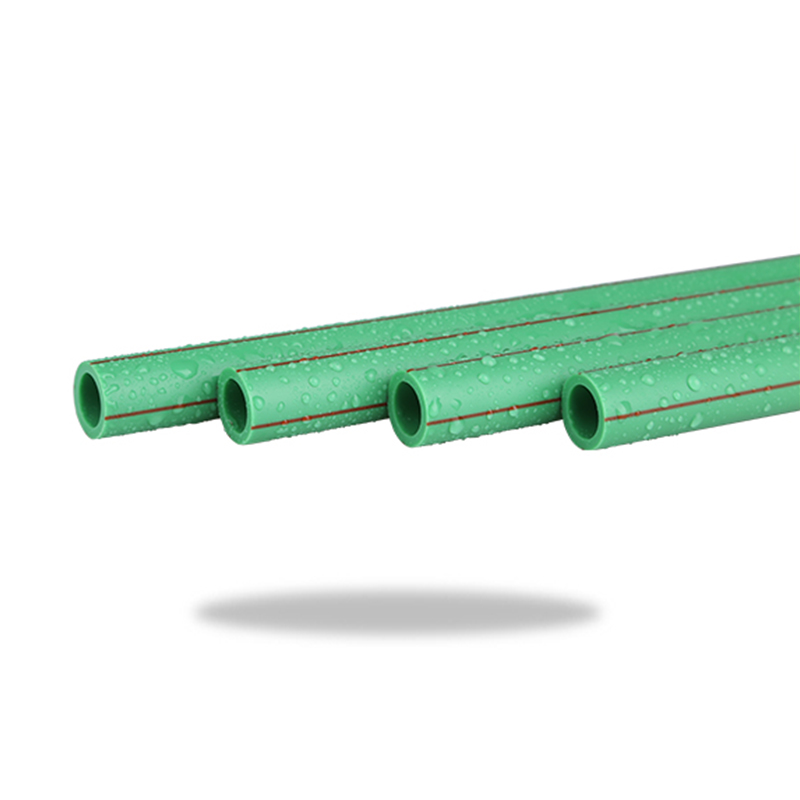
PPR pipes (Polypropylene Random Copolymer pipes) are rigid plastic pipes used primarily for hot and cold water supply systems in residential, commercial, and industrial buildings. They are made from a type of polypropylene in which ethylene monomers are randomly distributed throughout the polymer chain — this "random" structure is what gives PPR its combination of flexibility, heat resistance, and long-term pressure tolerance that standard polypropylene lacks.
PPR pipes are one of the most widely installed plumbing materials globally, particularly in Europe, the Middle East, and Asia. They handle both cold water at standard pressure and hot water at temperatures up to 95°C (203°F), making them genuinely suitable for the full range of domestic plumbing — something that PVC pipes, for example, cannot reliably do for hot water lines.
How PPR Pipes Are Joined: Heat Fusion, Not Glue or Threading
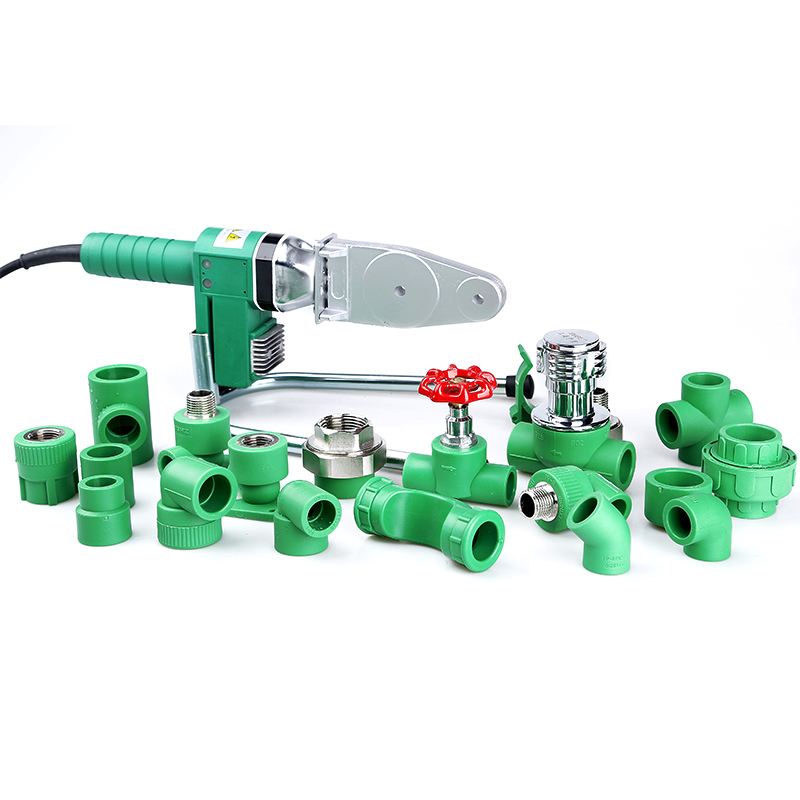
One of PPR's defining characteristics is its joining method. PPR pipes are connected using heat fusion (socket fusion welding) — a heating tool melts both the pipe end and the fitting socket simultaneously to around 260°C (500°F), and the two pieces are pushed together to form a single homogeneous joint as the plastic cools. There are no adhesives, no solvents, no threads, and no rubber seals involved.
This fusion joint is as strong as — and in some respects stronger than — the pipe itself. It creates a completely leak-free, permanent bond that doesn't degrade with temperature cycling or pressure fluctuations over time. In contrast, solvent-welded PVC joints can weaken under heat, and threaded metal joints can corrode or work loose. A properly made PPR fusion joint has a service life of 50 years or more under normal operating conditions.
PPR Pipe Types and Pressure Ratings
PPR pipes are manufactured in several series classifications based on their wall thickness and corresponding pressure rating. The standard system uses an SDR (Standard Dimension Ratio) or PN (Pressure Nominal) designation:
| PPR Type | Pressure Rating | Wall Thickness | Typical Use |
|---|---|---|---|
| PPR-S5 (PN10) | 10 bar (145 psi) | Thinnest | Cold water supply, low-pressure systems |
| PPR-S4 (PN12.5) | 12.5 bar (181 psi) | Medium-thin | Cold water, low-temperature heating |
| PPR-S3.2 (PN16) | 16 bar (232 psi) | Medium | Hot and cold water, standard plumbing |
| PPR-S2.5 (PN20) | 20 bar (290 psi) | Thick | Hot water systems, underfloor heating |
| PPR-S2 (PN25) | 25 bar (363 psi) | Thickest | Industrial hot water, high-pressure systems |
For standard residential hot and cold water plumbing, PN16 and PN20 are the most commonly specified grades. PN10 is generally reserved for cold-only applications where pressure demands are low. Note that pressure ratings decrease as operating temperature increases — a PN20 pipe rated at 20 bar at 20°C may only be rated at 8–9 bar at 70°C, so system designers must account for operating temperature when selecting the right grade.
PPR for Hot Water Lines: What Makes It Suitable
Hot water plumbing places demands on pipe materials that cold water systems don't. Pipes must maintain structural integrity, pressure resistance, and leak-free joints through repeated thermal expansion and contraction cycles over decades. PPR handles this through several material properties:
- Continuous service temperature up to 70°C (158°F) at standard working pressures, with short-term tolerance up to 95°C (203°F)
- Low thermal conductivity (approximately 0.24 W/m·K) — significantly less heat loss through pipe walls compared to copper (385 W/m·K), meaning hot water arrives at the tap closer to its source temperature
- Smooth internal bore that resists scale buildup and limescale accumulation — a common problem in metal hot water pipes in hard water areas
- No corrosion, oxidation, or electrochemical reaction with hot water — metal pipes corrode from the inside outward over time in hot water systems
- Thermal expansion of approximately 0.15 mm per meter per °C — expansion loops or offsets must be incorporated in long straight runs to prevent stress buildup
For domestic hot water systems — including connections to water heaters, boilers, and radiator circuits — PPR at PN20 or PN25 is the recommended specification. In underfloor heating systems, where hot water circulates continuously through embedded pipes, PPR is one of the standard materials alongside cross-linked polyethylene (PEX).
PPR-CT (PPR with Aluminum or Fiberglass Core) for Hot Water
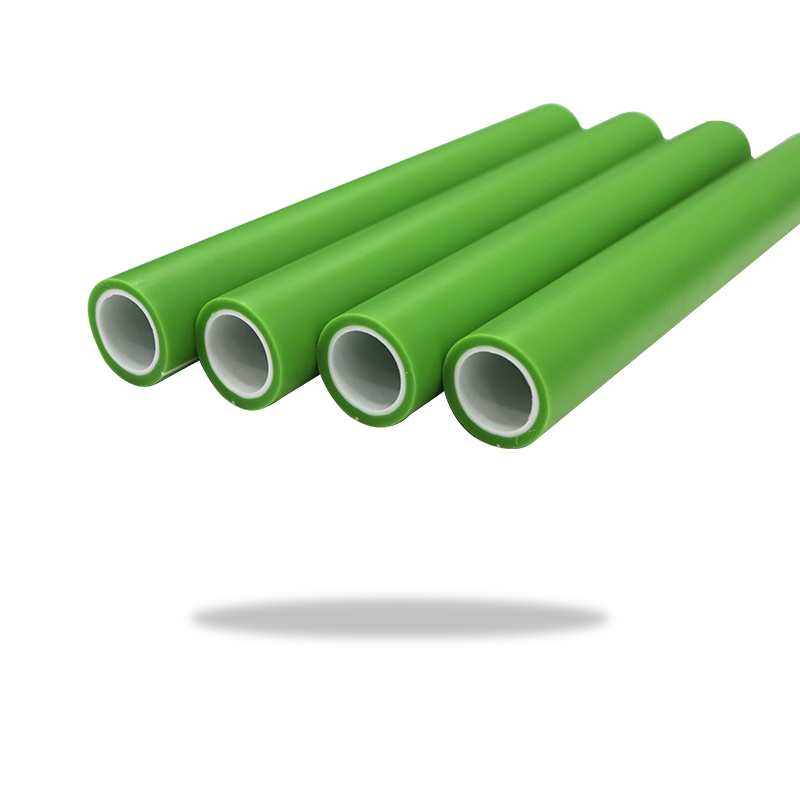
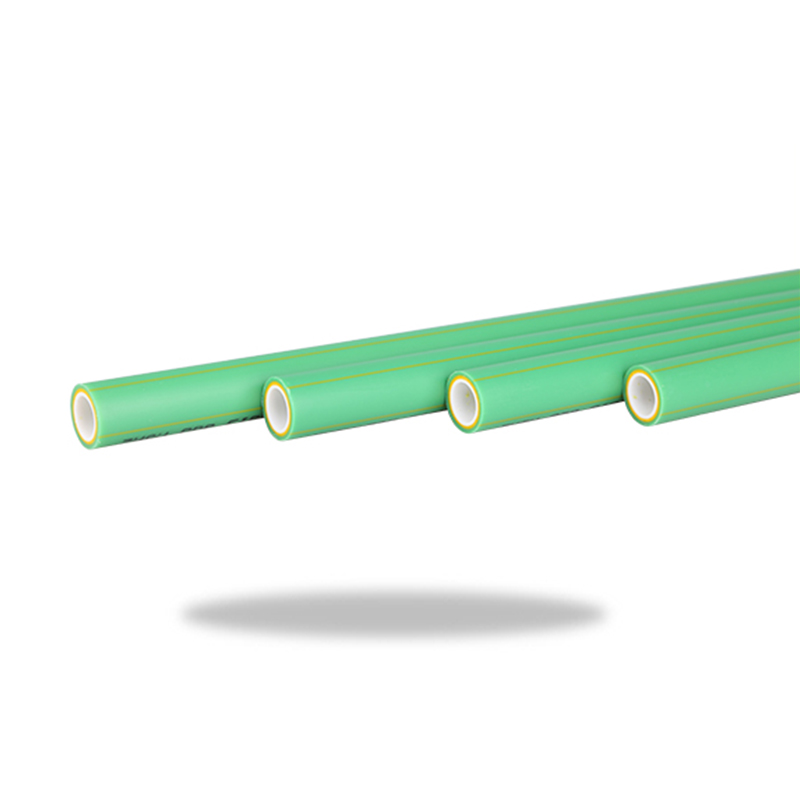
Standard PPR has a relatively high thermal expansion coefficient compared to metal. For hot water systems with long straight runs, composite PPR pipes — with an internal aluminum layer (PPR-AL-PPR) or a fiberglass reinforcement layer — are used to reduce thermal expansion by up to 75% compared to standard PPR. These composite pipes are stiffer, slightly heavier, and more expensive, but they eliminate the need for expansion compensation in most residential installations.
PPR for Cold Water Lines: Reliable but Correctly Specified
For cold water supply — mains pressure incoming water, cold distribution within buildings, irrigation systems — PPR performs well but requires attention to UV exposure and impact resistance in certain installations:
- Standard PPR is not UV-stabilized — grey or black UV-resistant PPR grades must be used for outdoor or exposed installations. Green or white standard PPR will degrade under prolonged direct sunlight.
- PPR becomes more brittle at low temperatures — below 0°C, impact resistance drops significantly, so cold climate installations require appropriate insulation or burial below frost depth
- For cold water at standard mains pressure (typically 2–6 bar in residential systems), PN10 or PN16 is sufficient — thicker grades add unnecessary cost without performance benefit
- PPR does not support bacterial growth in its pipe walls, making it suitable for potable (drinking) water systems — confirmed by compliance with international standards including DIN 8077/8078 and ISO 15874
PPR vs Other Pipe Materials for Hot and Cold Water
| Property | PPR | Copper | CPVC | PEX |
|---|---|---|---|---|
| Hot water suitability | Excellent (to 95°C) | Excellent | Good (to 93°C) | Good (to 95°C) |
| Cold water suitability | Excellent | Excellent | Excellent | Excellent |
| Corrosion resistance | Excellent | Moderate (acidic water) | Excellent | Excellent |
| Joint method | Heat fusion | Soldering | Solvent cement | Crimp / press fittings |
| Flexibility | Rigid | Semi-rigid | Rigid | Flexible |
| Relative cost | Low–Moderate | High | Low–Moderate | Moderate |
| Expected service life | 50+ years | 50+ years | 50+ years | 25–50 years |
Standard Pipe Sizes and What They're Used For
PPR pipes are manufactured in nominal outside diameters following ISO standards. The most common sizes in residential and light commercial use are:
- 20mm (DN15): Individual fixture connections — faucets, toilets, shower valves
- 25mm (DN20): Branch lines serving two to four fixtures; most common residential pipe size
- 32mm (DN25): Main distribution lines within a single-family home or apartment unit
- 40mm (DN32): Risers and main building supply lines in multi-story residential buildings
- 50mm and above: Commercial and industrial distribution mains, plant room connections
Key Advantages and Limitations of PPR Pipe
Advantages
- No corrosion, rust, or scale buildup — maintains flow rate and water quality over the full service life
- Heat fusion joints are permanent and as strong as the pipe — no risk of joint failure from vibration or pressure spikes
- Lightweight — approximately one-eighth the weight of equivalent copper pipe, reducing installation labor and structural load
- Low thermal conductivity reduces heat loss in hot water lines and condensation on cold water lines
- Potable water safe — does not leach metals or chemicals under normal operating conditions
- Quieter than metal pipes — absorbs flow noise rather than transmitting it through the structure
Limitations
- Rigid and not bendable — requires fittings at every direction change, unlike flexible PEX which can be curved around obstacles
- Requires a heat fusion tool (typically rented or owned by plumbers) — not a DIY-friendly joining method in the way push-fit or compression fittings are
- Thermal expansion in hot lines requires design accommodation — expansion loops or composite pipe grades must be used in long straight runs
- Not suitable for buried outdoor installations in freezing climates without insulation — pipe damage from water freezing inside is irreversible
- Standard grades degrade under UV exposure — outdoor or exposed installations require UV-stabilized black or grey pipe

 Email:
 Telephone:+86-21-57461561
 Phone:+86-18721379989


