


 简体中文
简体中文 English
 русский
 Español
 Français
 عربى
عربى Português
 日本語
日本語 italiano
 Nederlands
 Polskie
Content
- 1 The Short Answer: Polyethylene, with Coated Steel as the Backup
- 2 Why HDPE Pipe Has Become the Default for Underground Gas Lines
- 3 When Code Officials or Project Conditions Require Steel Pipe
- 4 Pipe Materials to Keep Out of a Gas Trench
- 5 Installation Rules That Apply to Any Underground Gas Line
- 6 What to Look for When You Buy Pipe for an Underground Gas Project
The Short Answer: Polyethylene, with Coated Steel as the Backup
High-density polyethylene (HDPE) pipe, manufactured to ASTM D2513, is the material that most gas contractors will specify for an underground natural gas line today. It does not corrode, its fusion-welded joints are strong enough to be treated as continuous pipe, and it can bend around obstructions without requiring a single underground fitting. Coated steel pipe is the legitimate second option, and it is still required in some localities, higher-pressure services, or unusual soil conditions. Copper, black iron, PVC, and unprotected steel should not be buried in a gas trench unless a specific code or manufacturer listing says they can.
That conclusion matters because underground gas piping failures are not like above-ground pipe failures. A small leak under a driveway can go undetected for years, and the entire line must be excavated to repair it. Material selection is therefore not a preference exercise; it is a code-compliance and safety decision.
Why HDPE Pipe Has Become the Default for Underground Gas Lines
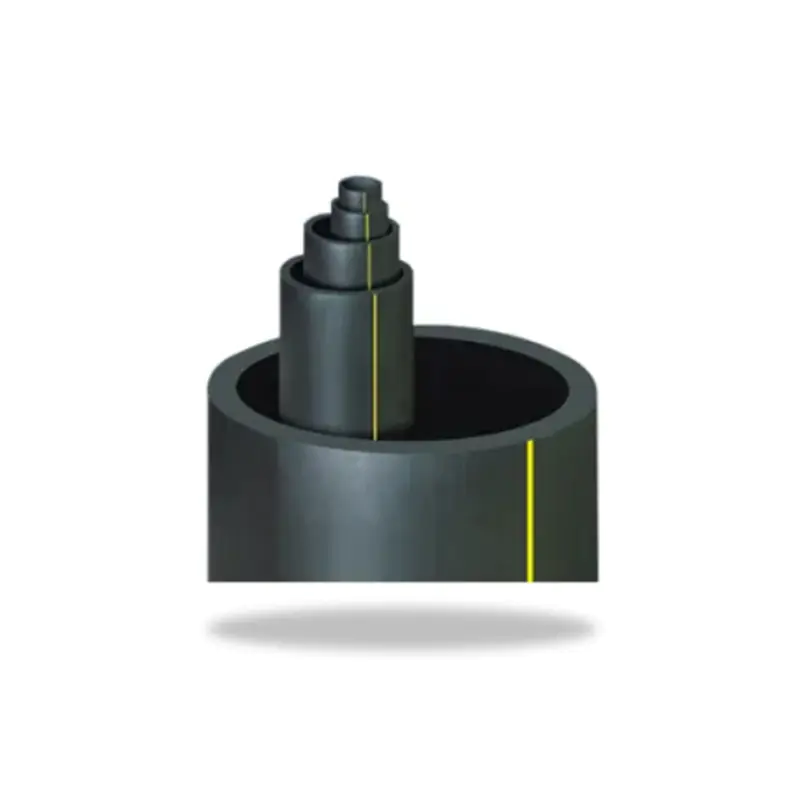
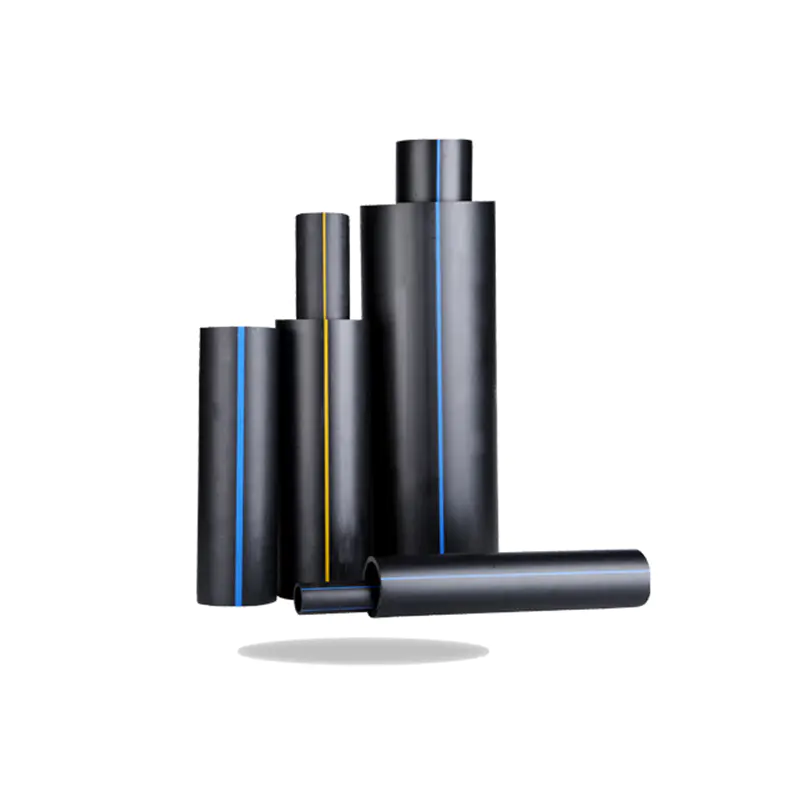
Polyethylene pipe for gas service is a proven, regulated product, not a generic plastic tube. It is produced specifically to the ASTM D2513 standard and typically appears as an SDR 11 pipe with an identification stripe and printed markings that state the material class and pressure rating. For most residential and commercial gas distribution systems, PE4710 resin, also sold as PE100 in many global markets, is the material grade that current specifications call for.
Three characteristics explain why HDPE dominates the underground market:
- Corrosion resistance. Polyethylene does not require wrapping, coating, or cathodic protection, which means there is nothing to degrade over time in damp or acidic soil.
- Fusion joints. Butt fusion and electrofusion join PE pipe by melting the materials together, producing a joint that is leak-free and often stronger than the pipe wall itself. No mechanical couplings, threads, or solvent-cemented joints are needed below grade.
- Durability under ground movement. PE pipe can flex with soil settlement, frost movement, and even minor seismic activity without cracking, which is a major advantage over rigid metallic pipe.
There are, however, conditions attached to the use of PE gas pipe. Because the material is non-metallic, code requires a tracer wire buried with the pipe so that future excavations can locate the line. PE pipe must also be protected from direct sunlight when stored, and it is not intended for exposed above-ground runs. In a typical installation, the PE line transitions to steel or CSST above ground at a riser located at the meter or building wall.
When Code Officials or Project Conditions Require Steel Pipe
Steel remains the specified material for many underground gas installations, particularly in commercial and industrial projects where higher operating pressures, mechanical damage risk, or local amendments to the fuel gas code favor a metallic line. The code-baseline material is standard-weight Schedule 40 wrought iron or steel pipe, galvanized or otherwise protected against corrosion.
Galvanizing alone, however, is not sufficient protection for buried steel in most soils. The accepted practice is to wrap the pipe with a corrosion-protection system such as Scotch coat, mill-applied protective tape, or an extruded polyethylene coating, and in aggressive soils an engineered cathodic protection system is added. Unprotected black steel buried in soil will begin to corrode quickly; the exterior rust, combined with the internal sulfur compounds found in natural gas, shortens the service life dramatically.
Steel pipe also brings a jointing concern: a threaded Schedule 40 joint is acceptable under many codes, but threaded connections are a common leak point when the pipe is subjected to the sustained bending and vibration of soil settlement. For this reason, many contractors prefer to have steel lengths welded rather than threaded when the run will be buried.
Choose steel when a gas utility, local inspector, or engineering specification explicitly requires it, when the burial depth must be minimal, or when the line will cross an area where the soil is so rocky that a plastic pipe could be punctured by backfill before it is covered. Otherwise, HDPE will almost always be the simpler, lower-cost, and longer-lived choice.
Pipe Materials to Keep Out of a Gas Trench
Some materials that are perfectly adequate for water, drainage, or interior gas piping do not belong underground in a gas system. Knowing which ones to refuse is as important as knowing which one to buy.
Black iron pipe is the standard material for interior gas lines in many buildings, but it has no corrosion protection and must not be direct-buried. Copper has been prohibited by most fuel gas codes because sulfur compounds in natural gas attack copper, producing corrosive scale that can fail within a few years. PVC is the most common misidentification among less experienced buyers: PVC drain pipe is neither pressure-rated for gas nor permitted by code, and its solvent-cemented joints can open when soil moves. CSST is designed for indoor flexible gas runs; only specific listed direct-burial versions may be installed underground, and even those must typically be routed through a conduit and bonded to the grounding system.
| Material | Direct burial permitted by code? | Primary limitation |
|---|---|---|
| HDPE / PE (ASTM D2513) | Yes | Requires tracer wire; no exposed above-ground use |
| Coated Schedule 40 steel | Yes, with corrosion wrapping | Coating can be damaged; threads are leak-prone |
| Black iron | No | Corrodes rapidly without protective coating |
| Copper | No | Corrosion from sulfur compounds in gas |
| PVC | No | Not pressure-rated or listed for gas service |
| CSST | Only listed direct-burial types | Requires conduit and grounding in most installations |
Installation Rules That Apply to Any Underground Gas Line
The best pipe in the world will fail an inspection if it is buried incorrectly. The International Fuel Gas Code and the International Residential Code, which form the basis of most local gas piping regulations, set testable requirements that apply to both polyethylene and steel systems.
- Burial depth. Gas lines are typically required to have at least 12 to 18 inches of cover, with deeper cover under driveways and vehicle traffic areas. Local authorities can increase that depth; check the amendment sheet before trenching.
- Tracer wire and marking tape. Non-metallic piping must be installed with a continuous tracer wire that runs to a test point, and many jurisdictions also require a detectable warning tape above the pipe to alert excavators.
- Backfill protection. The first layer of backfill must be free of rocks and sharp debris; sand or fine soil is commonly used to protect the pipe and any coating from damage.
- Pressure test. Underground piping must be pressure-tested before the trench is backfilled, so that leaks are found while they are still accessible.
- Permit and inspection. Most municipalities require a permit for any gas line work and will schedule an inspection at the open-trench stage. Working without the inspection voids insurance coverage in many cases.
Each of these requirements exists because buried pipe cannot be visually inspected later. The cost of doing the job properly at the time of installation is trivial compared with the cost of excavating a concrete driveway to find a pinhole leak.
What to Look for When You Buy Pipe for an Underground Gas Project
Not every polyethylene pipe is approved for gas, and not every supplier has the production controls to deliver a consistent product. When you compare quotes, verify the four points that separate a code-compliant material from a liability risk.
First, the pipe must be produced to a recognized gas standard, such as ASTM D2513 in North America, ISO 4437 for gas in many international markets, or the relevant national standard, and it must be marked accordingly. Second, it should be compounded from virgin PE4710 or PE100 resin; recycled or third-party compounds offer lower cost but they do not carry the stress-rupture data that gas service demands. Third, the manufacturer should be able to document quality control through an ISO 9001-certified production system and an in-house laboratory that tests each batch. Fourth, check the traceability marking on the pipe, which should identify the producer, material class, pressure rating, and manufacturing date in permanent print.
Manufacturers that serve export gas markets, such as Shanghai Zhongsu Pipe Co., Ltd. in Shanghai, China, typically structure their HDPE line specifically around these requirements. Shanghai Zhongsu produces a dedicated HDPE pipe for gas distribution, operates a 70,000-square-meter facility, and holds ISO 9001, ISO 14001, and OHSAS 18001 certification, along with a CNAS-accredited laboratory for material and pressure testing. The practical point for a buyer is that a gas line is only as good as the combination of material grade, production control, and installation quality behind it. A cheap, unmarked pipe buried at the wrong depth can negate every other part of a well-designed system.

 Email:
 Telephone:+86-21-57461561
 Phone:+86-18721379989


