


 简体中文
简体中文 English
 русский
 Español
 Français
 عربى
عربى Português
 日本語
日本語 italiano
 Nederlands
 Polskie
Content
- 1 The Direct Answer: Approved Pipe Types for Gas Lines
- 2 Black Steel Pipe: The Standard for Indoor Gas Lines
- 3 CSST: Corrugated Stainless Steel Tubing for Flexible Runs
- 4 Copper Tubing for Gas: Permitted in Some Regions, Prohibited in Others
- 5 Polyethylene (PE) Pipe: The Standard for Underground Gas Distribution
- 6 Gas Pipe Type Comparison by Application
- 7 What PPR Pipe Is and Where It Is Actually Used
- 8 PPR Pipe Sizes: Dimensions, Wall Thickness, and Pressure Ratings
- 9 Selecting the Right PPR Pipe Size for Common Applications
- 10 PPR Pipe vs Other Plastic Pipe Materials
- 11 Key Installation Rules for Gas Lines: What Not to Get Wrong
The Direct Answer: Approved Pipe Types for Gas Lines
The most commonly used pipes for gas lines are black steel pipe, corrugated stainless steel tubing (CSST), copper tubing, and polyethylene (PE) pipe. The correct choice depends on whether the installation is underground or above ground, indoors or outdoors, and the applicable local building code. PPR pipe — polypropylene random copolymer — is not approved for gas service in most jurisdictions; it is a hot and cold water plumbing material, not a gas piping material.
Understanding both gas pipe types and PPR pipe sizes matters for anyone planning a plumbing or gas installation, since the two systems often run through the same building and are specified at the same project stage. This guide covers both topics in practical detail.
Black Steel Pipe: The Standard for Indoor Gas Lines
Black steel pipe is the most widely used material for natural gas and propane distribution inside residential and commercial buildings across North America and much of Europe. It gets its name from the dark iron oxide surface coating — unlike galvanized pipe, it has no zinc coating, which makes it preferred for gas because zinc can flake off and clog regulators and valves.
Black steel pipe for gas is manufactured to ASTM A53 or ASTM A106 standards and is available in Schedule 40 (standard wall) and Schedule 80 (extra-heavy wall) thicknesses. Schedule 40 is used for the vast majority of residential gas installations. Key characteristics:
- Suitable for operating pressures up to 125 PSI in Schedule 40 for typical residential sizes.
- Joined with threaded fittings and pipe dope (thread sealant rated for gas) or with welded joints in commercial applications.
- Not suitable for direct burial without protective coating — bare black steel corrodes rapidly in soil contact.
- Common residential sizes range from ½ inch to 2 inches NPS; larger diameters used in commercial and industrial distribution.
One critical installation note: never use galvanized steel pipe for gas. The zinc coating reacts with certain gas additives over time and can produce white powder deposits that block regulators and damage appliance components. This is explicitly prohibited under NFPA 54 (National Fuel Gas Code) in the US.
CSST: Corrugated Stainless Steel Tubing for Flexible Runs
Corrugated stainless steel tubing (CSST) has become increasingly popular since the 1990s as an alternative to rigid black steel pipe, particularly for retrofits and complex routing situations. It is a flexible, yellow-jacketed stainless steel tubing that can bend around obstacles and be routed through walls and joists without the extensive fitting count required by rigid pipe.
Major CSST brands in the US include Gastite, TracPipe, and OmegaFlex. CSST is approved under ANSI/LC 1 and listed by ICC and NFPA 54. Key practical points:
- Available in sizes from 3/8 inch to 2 inches (equivalent pipe diameter); sizing is based on flow capacity tables provided by the manufacturer.
- Faster to install than rigid black steel — studies suggest CSST reduces installation time by 30–50% on typical residential jobs.
- Bonding and grounding requirements are critical: CSST must be bonded to the building's electrical grounding system because its thin corrugated wall is vulnerable to lightning-induced electrical arcing, which can perforate the tubing.
- Not permitted for use in some jurisdictions without additional bonding at every appliance connection — always check local code amendments.
Copper Tubing for Gas: Permitted in Some Regions, Prohibited in Others
Copper tubing (Types K and L) is approved for gas service in many parts of the US, Canada, and Australia, but prohibited in several states and localities due to concerns about hydrogen sulfide in the gas supply reacting with copper to form copper sulfide deposits. Always verify local code before specifying copper for gas.
Where permitted, copper is used primarily for appliance connectors and short interior runs. It is joined with flare fittings or soldered (brazed) joints — never with lead solder, which is prohibited in all gas applications. Copper is not used for underground gas service.
Polyethylene (PE) Pipe: The Standard for Underground Gas Distribution
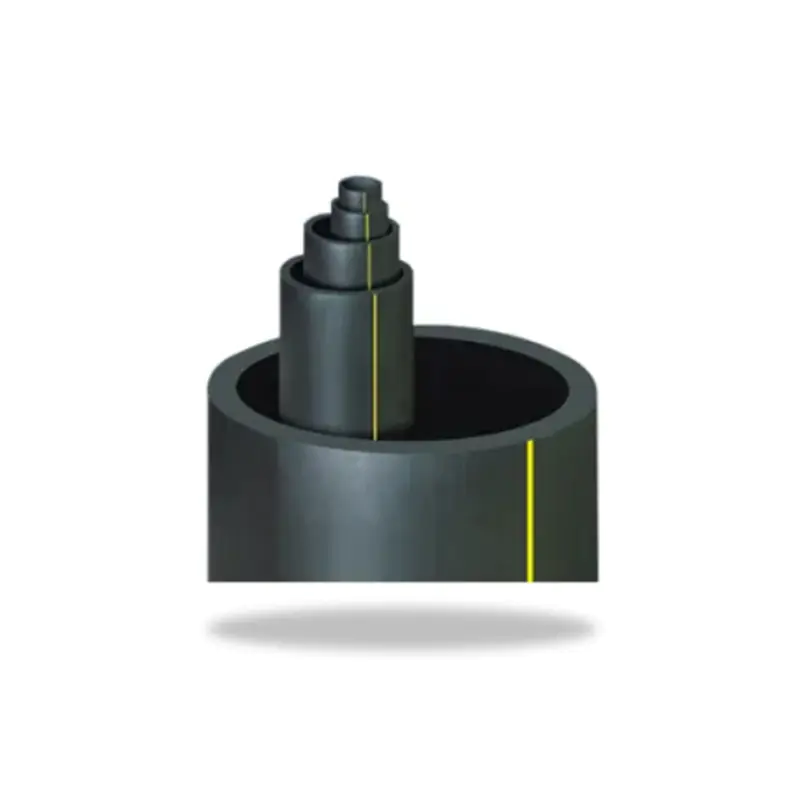
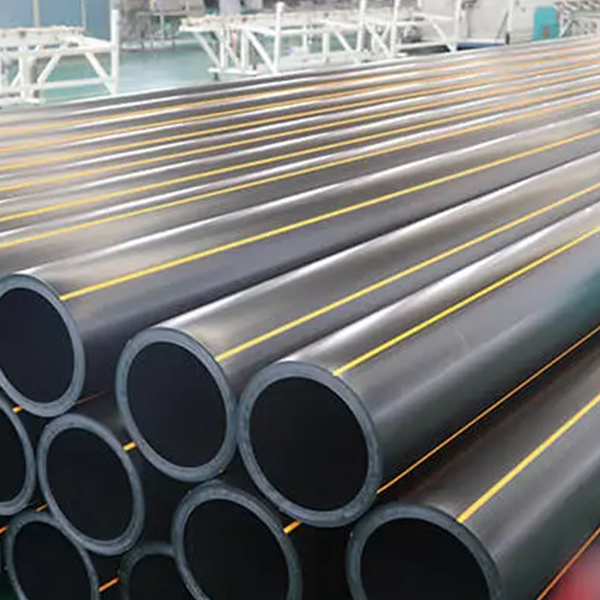
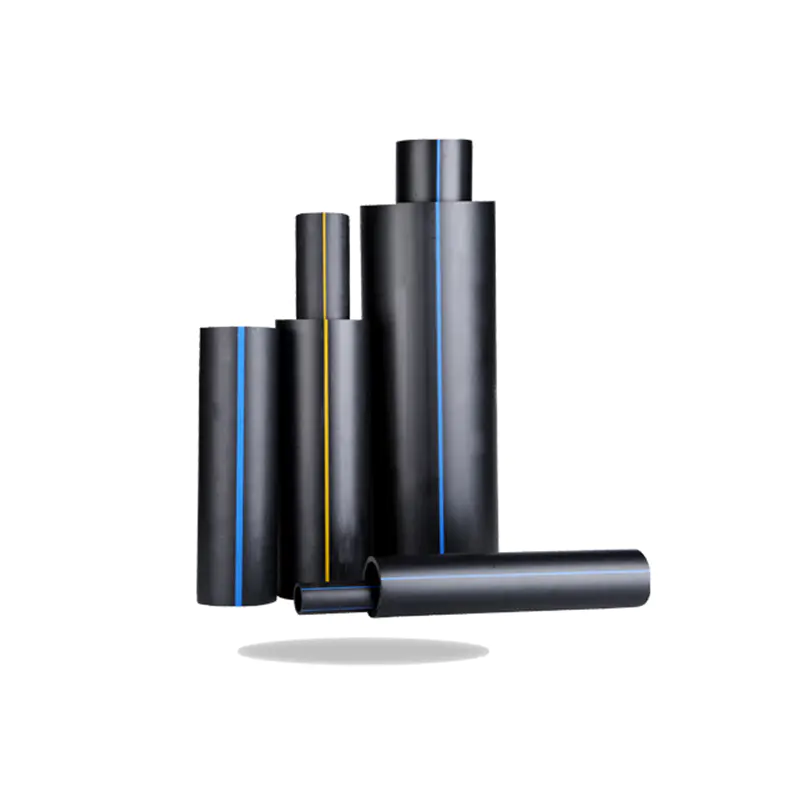
High-density polyethylene (HDPE) and medium-density polyethylene (MDPE) pipe are the dominant materials for underground gas distribution systems, from utility mains to residential service lines. PE pipe is corrosion-proof, flexible enough to accommodate ground movement, and joinable by heat fusion — creating leak-free monolithic joints that outperform mechanical fittings in buried service.
PE pipe for gas is manufactured to ASTM D2513 in the US and to EN 1555 in Europe. Key specifications:
- Color-coded yellow (US) or yellow stripe on black (Europe) to identify gas service; never use plain black PE water pipe for gas.
- Available in pressure ratings: PE 2406, PE 3408, PE 4710 (US designations) — the numbers relate to the material's hydrostatic design basis and affect allowable operating pressure.
- Must be installed with a minimum cover depth of 18 inches (450 mm) under private property and 24 inches (600 mm) under roadways per NFPA 54 and most local codes.
- Cannot be used above ground or inside buildings — PE must transition to steel or CSST at the point where the service line enters the structure, using an approved transition fitting.
Gas Pipe Type Comparison by Application
| Pipe Type | Indoor Above Ground | Underground | Natural Gas | Propane (LP) | Key Standard |
|---|---|---|---|---|---|
| Black steel (Sch 40) | Yes | With coating only | Yes | Yes | ASTM A53 / A106 |
| CSST | Yes | Limited / brand-specific | Yes | Yes | ANSI/LC 1 |
| Copper (Type K/L) | Where permitted | No | Where permitted | Yes (most areas) | ASTM B88 |
| PE / HDPE (yellow) | No | Yes | Yes | Yes | ASTM D2513 |
| PPR pipe | No | No | No | No | ISO 15874 (water only) |
What PPR Pipe Is and Where It Is Actually Used
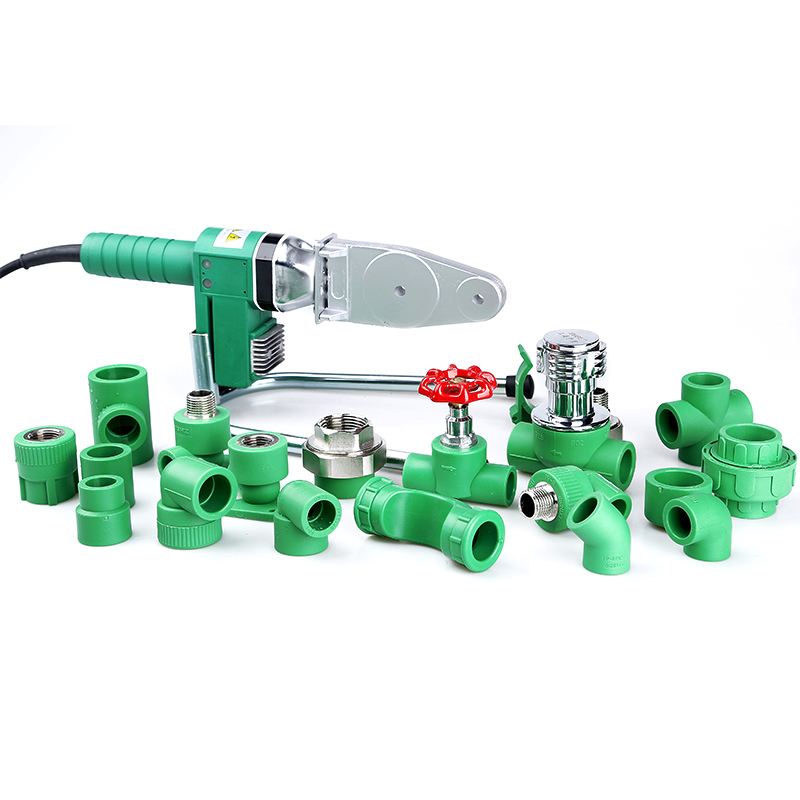
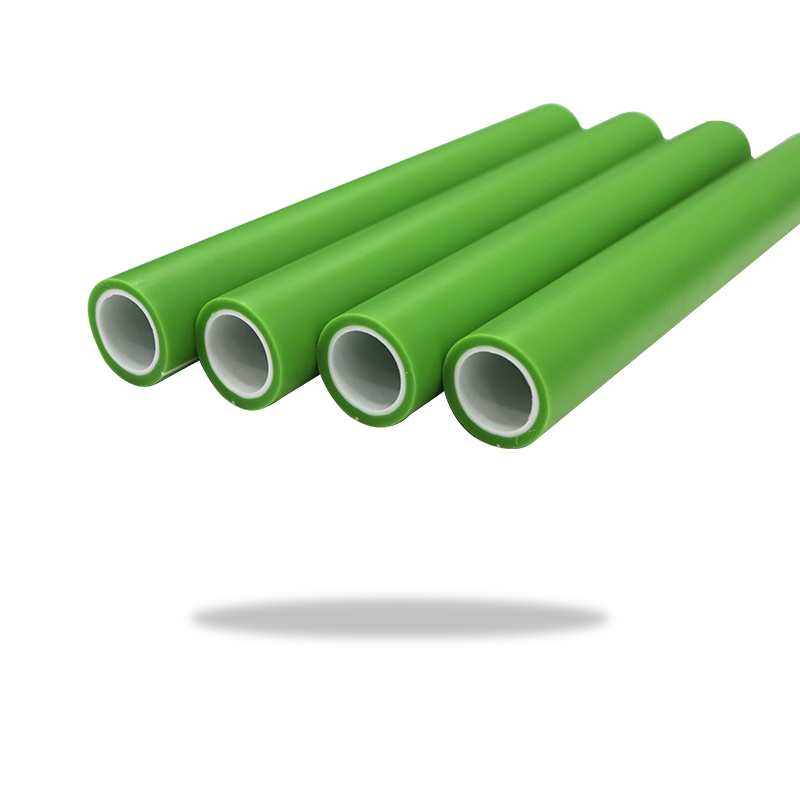
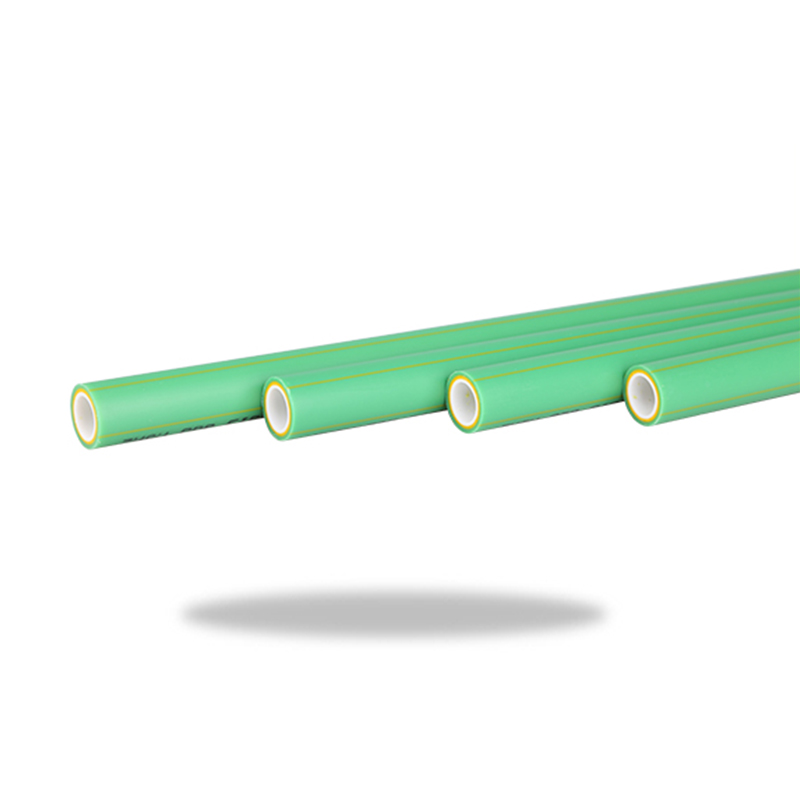
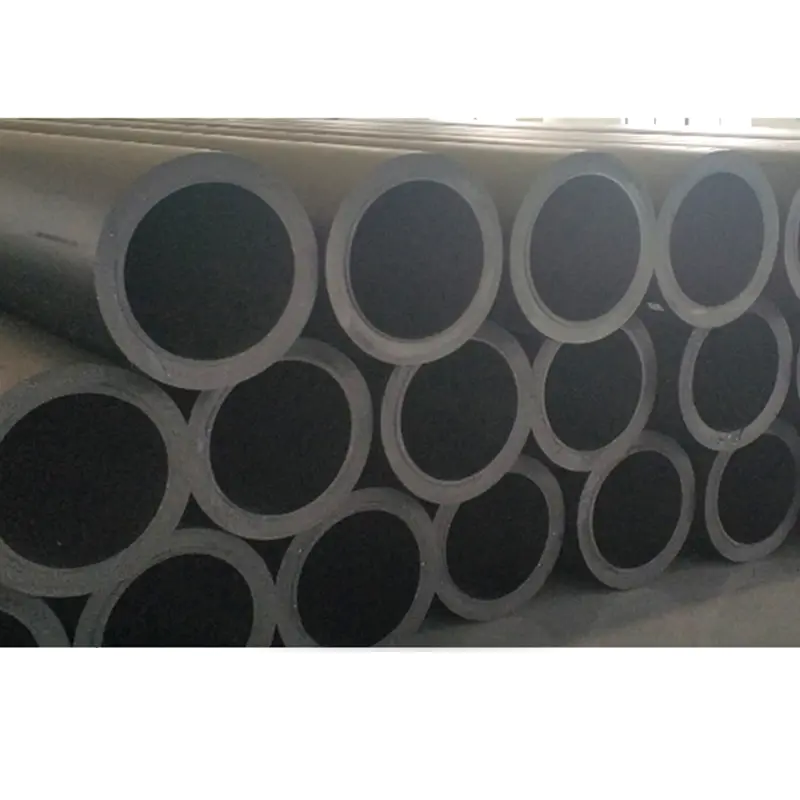
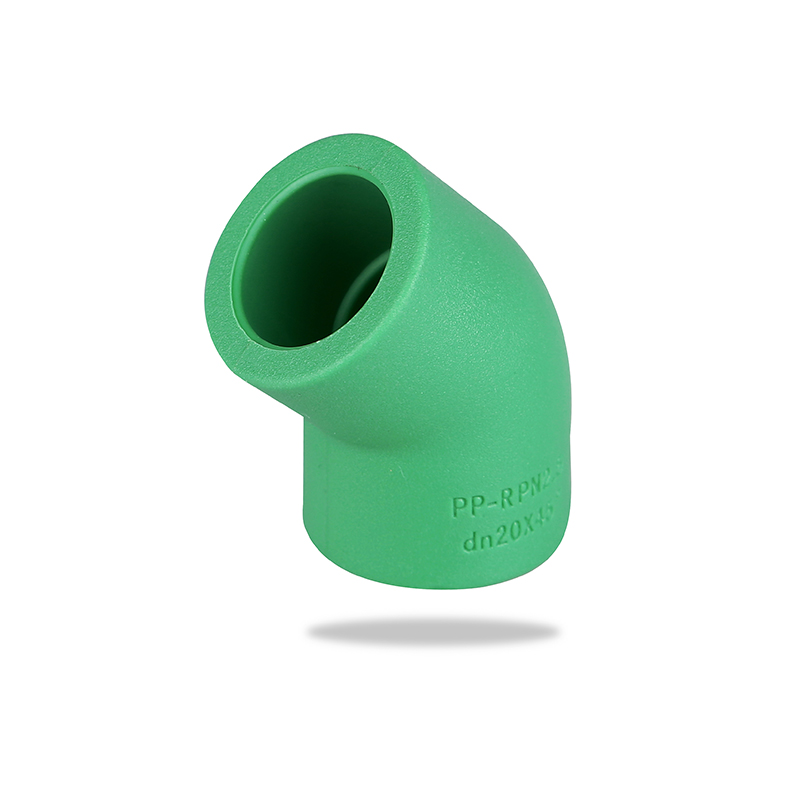
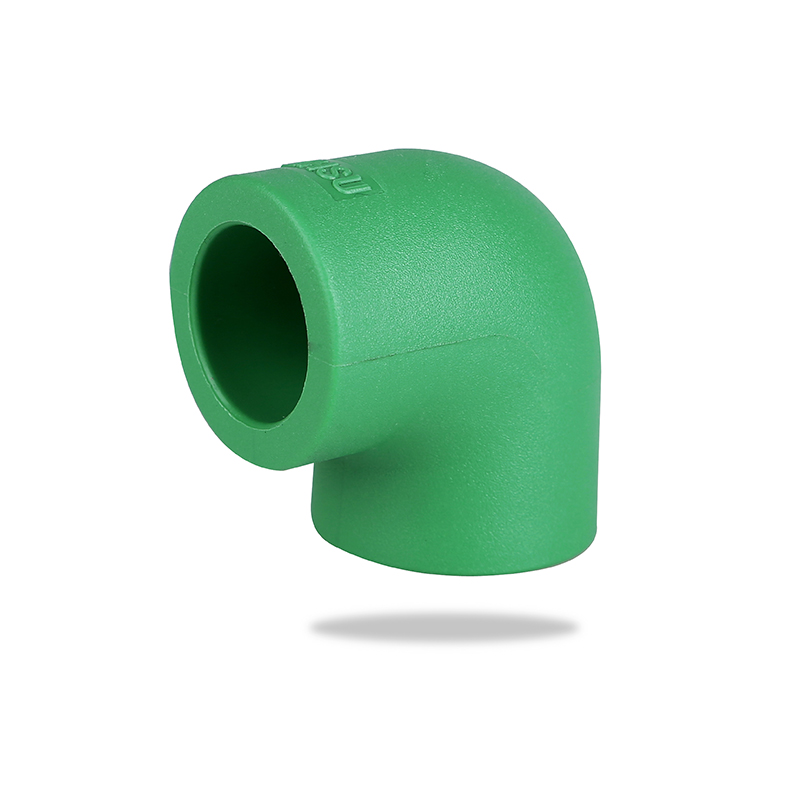
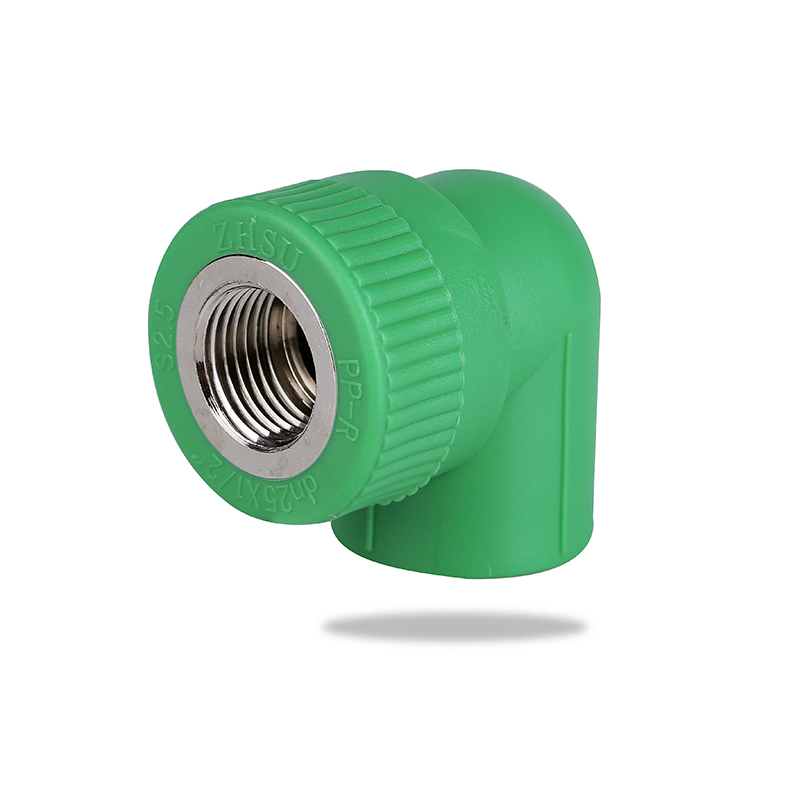
PPR (polypropylene random copolymer) pipe is a thermoplastic piping system used exclusively for hot and cold potable water supply, hydronic heating, and industrial fluid transport. It is not a gas pipe material. PPR is joined by heat fusion (socket welding or butt welding), creating seamless joints that are as strong as the pipe itself — a key advantage over threaded or push-fit systems.
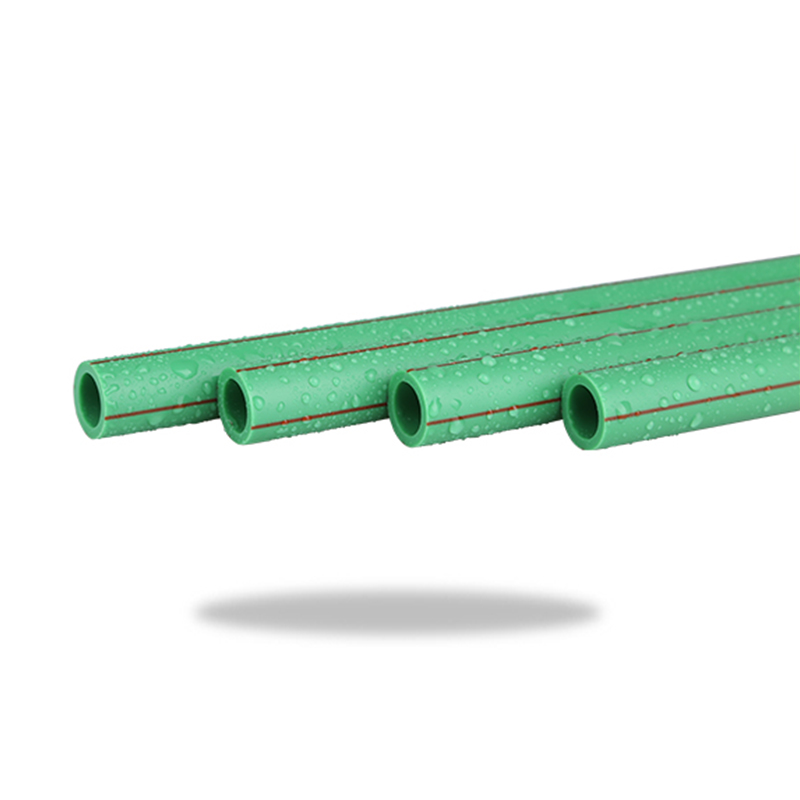
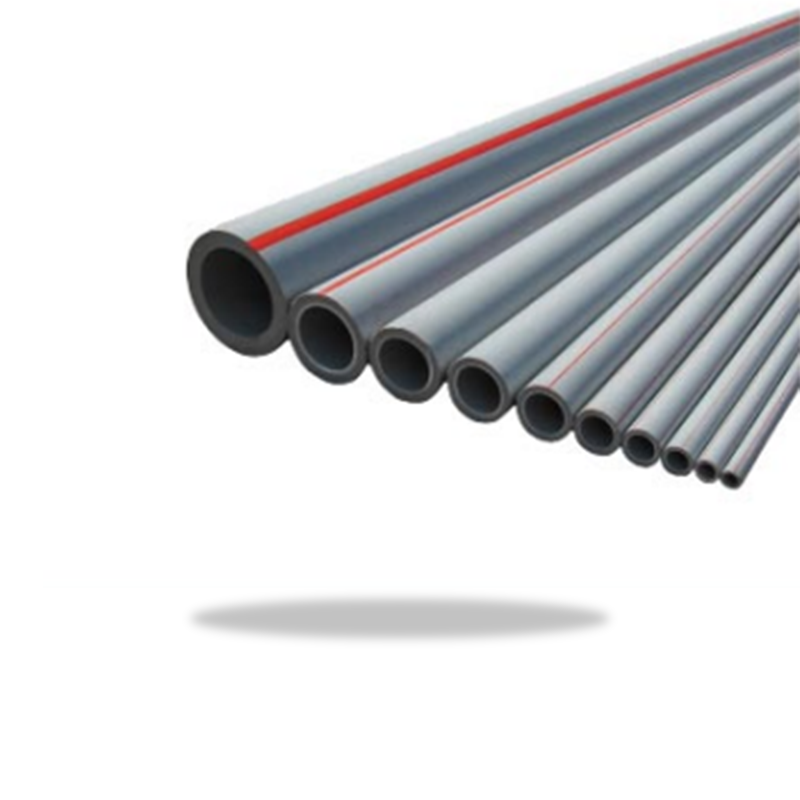
PPR pipe is manufactured to ISO 15874 (international standard) and DIN 8077/8078 (German standard), which are the most widely referenced specifications globally. It is color-coded green or white for cold water and typically grey or with a red stripe for hot water systems.
PPR is popular across Europe, the Middle East, Asia, and Latin America as a replacement for copper and galvanized steel in building water supply. In the US it has seen slower adoption, where PEX and CPVC dominate the residential plastic pipe market.
PPR Pipe Sizes: Dimensions, Wall Thickness, and Pressure Ratings
PPR pipe sizing follows the metric OD (outside diameter) system under ISO 15874. Pipes are categorized by their SDR (Standard Dimension Ratio) — the ratio of outside diameter to wall thickness — which determines pressure rating. Common SDR classes are:
- SDR 11 (PN 10): Rated for 10 bar working pressure; used for hot water systems up to 60°C.
- SDR 7.4 (PN 16): Rated for 16 bar at 20°C; the most common class for general building hot and cold water supply.
- SDR 6 (PN 20): Heavy wall; rated for 20 bar; used in industrial applications or where elevated temperature and pressure coexist.
Note that pressure ratings decrease with increasing temperature. A PN 16 PPR pipe rated at 16 bar at 20°C is only rated for approximately 4–5 bar at 70°C. Always consult the manufacturer's de-rating curve when specifying PPR for hot water or heating applications above 60°C.
Standard PPR Pipe Size Chart
| Nominal OD (mm) | Wall Thickness SDR 11 / PN 10 (mm) | Wall Thickness SDR 7.4 / PN 16 (mm) | Wall Thickness SDR 6 / PN 20 (mm) | Approx. Inner Diameter PN 16 (mm) |
|---|---|---|---|---|
| 20 | 1.9 | 2.8 | 3.4 | 14.4 |
| 25 | 2.3 | 3.5 | 4.2 | 18.0 |
| 32 | 2.9 | 4.4 | 5.4 | 23.2 |
| 40 | 3.7 | 5.5 | 6.7 | 29.0 |
| 50 | 4.6 | 6.9 | 8.4 | 36.2 |
| 63 | 5.8 | 8.6 | 10.5 | 45.8 |
| 75 | 6.8 | 10.3 | 12.5 | 54.4 |
| 90 | 8.2 | 12.3 | 15.0 | 65.4 |
| 110 | 10.0 | 15.1 | 18.4 | 79.8 |
| 125 | 11.4 | 17.1 | 20.8 | 90.8 |
| 160 | 14.6 | 21.9 | 26.7 | 116.2 |
Selecting the Right PPR Pipe Size for Common Applications
PPR pipe sizing in building water supply follows flow velocity and pressure drop principles. As a practical guide, the most commonly used sizes for different parts of a building installation are:
- 20 mm OD: Individual fixture connections — single tap, toilet, shower, washing machine. Suitable for single-point connections up to approximately 5 meters from the manifold.
- 25 mm OD: Short branch runs serving 2–3 fixtures, or individual connections where longer pipe runs increase pressure drop.
- 32 mm OD: Branch lines serving a bathroom group (toilet, basin, bath/shower); the minimum recommended size for a full bathroom branch in most residential installations.
- 40 mm OD: Main distribution risers in small residential buildings; horizontal mains supplying multiple bathrooms.
- 50 mm OD: Main building entry point and risers in medium-sized residential or small commercial buildings.
- 63 mm and above: Building mains in larger commercial or multi-story residential buildings; hydronic heating distribution mains.
A useful rule of thumb: water flow velocity in PPR systems should be kept between 0.5 and 2.0 m/s. Velocities above 2.0 m/s generate noise and accelerate wear at fittings; velocities below 0.5 m/s allow sediment buildup. For hot water systems, keeping velocity below 1.5 m/s is preferable to minimize thermal stress on fittings.
PPR Pipe vs Other Plastic Pipe Materials
| Property | PPR | PEX | CPVC | PVC (uPVC) |
|---|---|---|---|---|
| Max temp (continuous) | 70–95°C | 82–95°C | 93°C | 60°C (cold only) |
| Join method | Heat fusion (socket weld) | Crimp, clamp, push-fit | Solvent cement | Solvent cement |
| Flexibility | Rigid | Flexible | Rigid | Rigid |
| Chemical resistance | Excellent | Good | Good | Good |
| UV resistance | Poor (needs protection) | Poor | Poor | Poor |
| Potable water approval | Yes | Yes | Yes | Yes (cold only) |
| Gas service approved | No | No | No | No |
Key Installation Rules for Gas Lines: What Not to Get Wrong
Gas line installation errors carry serious safety consequences. These are the most critical code requirements and best practices regardless of pipe material:
- Pressure testing before commissioning: All new gas piping must be pressure-tested and proven leak-free before connecting appliances. NFPA 54 requires testing at a minimum of 1½ times the maximum operating pressure, with 3 PSI as the minimum test pressure for systems operating at or below 2 PSI.
- No plastic pipe indoors for gas: PE pipe (yellow) is strictly for underground service only. Running PE pipe into or through buildings is a code violation in virtually every jurisdiction.
- Sediment trap (drip leg) at every appliance: A vertical drop of at least 3 inches of pipe capped at the bottom must be installed immediately upstream of every gas appliance connection to catch debris and condensate before it enters the appliance valve.
- Manual shut-off valve within reach of every appliance: A listed gas cock must be installed within 6 feet of every gas appliance and in the same room, accessible without tools.
- Pipe sizing based on length and BTU demand: Undersized gas pipe causes pressure drop that starves appliances of fuel. Always use the sizing tables in NFPA 54 or the local fuel gas code, not rule-of-thumb estimates. A ½-inch Schedule 40 black steel pipe at 10 feet can carry approximately 175,000 BTU/hr at 0.3" WC pressure drop — but at 100 feet, that same pipe delivers only about 60,000 BTU/hr.
- Permit and inspection requirements: Gas piping work requires a permit and inspection in nearly all US jurisdictions. Unpermitted gas work is a serious liability and may void homeowner insurance coverage in the event of an incident.

 Email:
 Telephone:+86-21-57461561
 Phone:+86-18721379989


