


 简体中文
 English
 русский
 Español
 Français
 عربى
 Português
 日本語
 italiano
 Nederlands
 Polskie

Content
- 1 The Short Answer: It Depends on Where the Line Runs
- 2 Steel Pipe for Gathering and Transmission Lines
- 3 Polyethylene Pipe for Underground Distribution and Service Lines
- 4 Black Iron and CSST Inside Buildings
- 5 Pipe Materials That Should Not Carry Natural Gas
- 6 Natural Gas Pipe Materials Compared
- 7 How to Choose the Right Gas Pipe
The Short Answer: It Depends on Where the Line Runs
No single pipe carries natural gas from the well to the stove. The material changes with the job: steel for the large lines that move gas across regions, plastic for the buried lines that feed neighborhoods, and iron or flexible stainless tubing inside buildings.
According to the federal pipeline safety agency's overview of natural gas pipeline systems, gathering and transmission lines are built from steel, while distribution systems have used cast iron, steel, copper and plastic. Plastic pipe is the most commonly installed material in distribution today.
The rest of this article follows the gas downstream, so you can see which pipe belongs at each stage and why.
Steel Pipe for Gathering and Transmission Lines
The first two stages of a gas system, collecting raw gas from production wells and moving it long distances, rely on steel. Outside service lines, the pipe in these systems runs from 2 inches up to 42 inches in diameter, which is why strength under sustained pressure matters more than flexibility here.
Steel that sits underground or outdoors needs protection. Schedule 40 steel is the usual choice, paired with a coating against soil and moisture. A common factory coating is a three-layer system of epoxy, adhesive and polyethylene.
Distribution is where the material story gets more varied. Older networks still contain cast iron, steel and copper, but new construction has shifted toward plastic.
Polyethylene Pipe for Underground Distribution and Service Lines
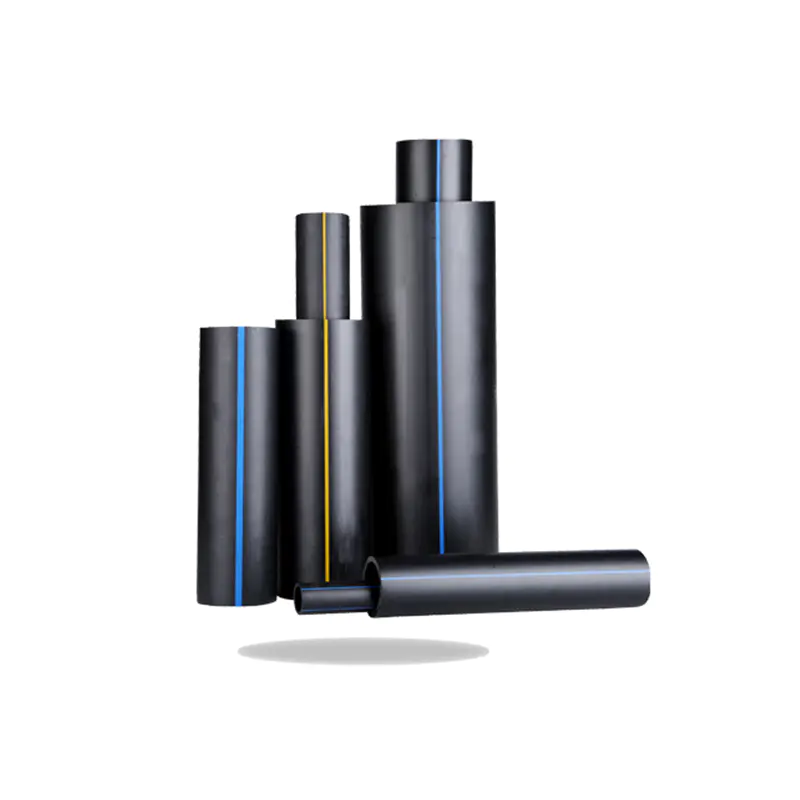
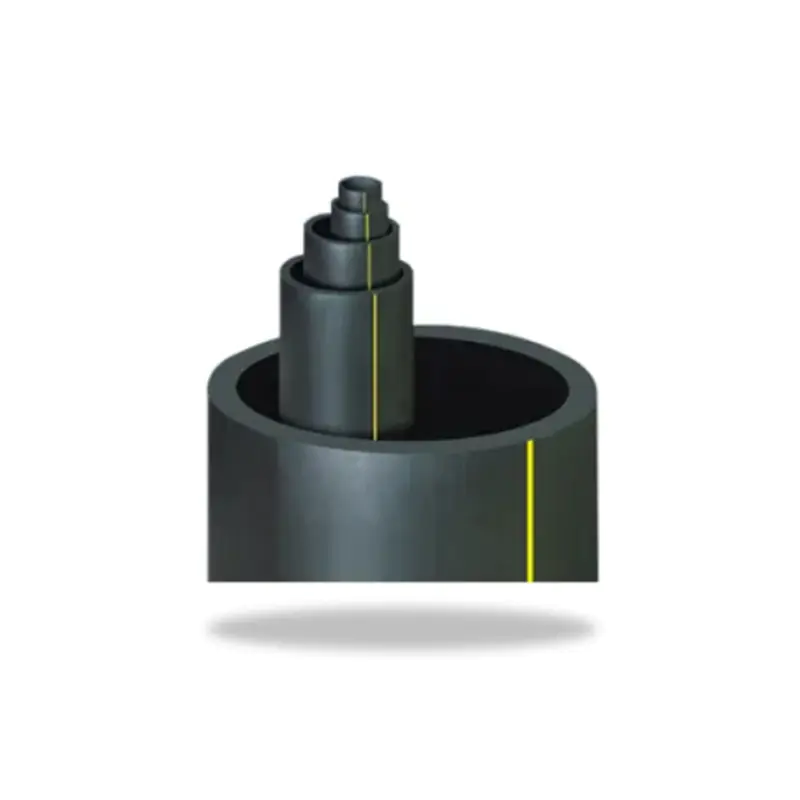
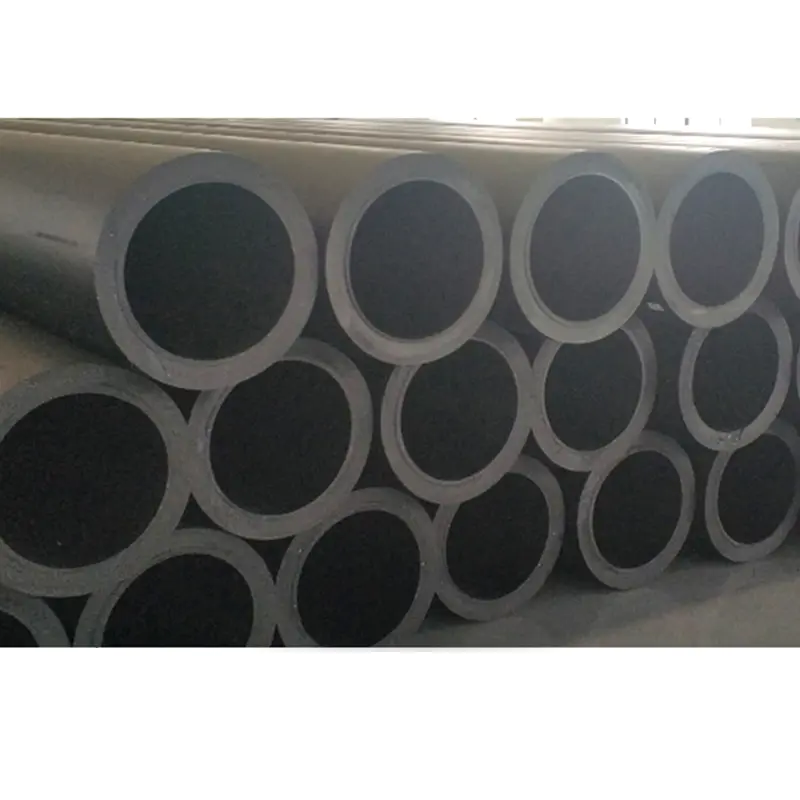
Once gas leaves the transmission system and heads toward homes and businesses, polyethylene (PE) is the standard buried pipe. It does not rust, it bends enough to follow uneven ground, and it comes in long continuous lengths, so a run needs far fewer joints than rigid pipe. Gas-grade PE is usually yellow, or black with a yellow stripe.
Joints are made by heat fusion or mechanical fittings, which is why installation is a job for trained crews rather than a weekend project. Butt fusion in particular produces a joint that is as strong as the pipe itself.
Two resin grades dominate gas work. PE80 suits low and medium pressure lines, while PE100 handles higher pressure with more impact resistance and a longer service life. A product such as this polyethylene pipe engineered for underground natural gas typically ranges from DN20 to DN1200 and is manufactured to standards such as ISO 4427 and ASTM F2619.
If you want the engineering reasons behind PE's popularity, this explanation of the properties that make HDPE suitable for gas transport covers corrosion resistance, low gas permeability and fusion jointing in detail.
Black Iron and CSST Inside Buildings
Inside a house, two materials do most of the work: black iron pipe and corrugated stainless steel tubing (CSST).
Black iron is mild steel without a zinc coating. It is rigid, joined with threaded fittings and sealed with approved joint compound or tape. It is tough, hard to puncture with a stray nail and one of the cheaper options. The trade-off is labor, since every length must be cut and threaded to fit, and it can rust where moisture is present.
CSST is flexible stainless tubing, usually covered in a yellow or black plastic jacket. It arrives in long rolls and snakes through walls and ceilings with few joints, which cuts installation time and reduces potential leak points. It costs more per foot, and it requires electrical bonding and grounding to the building's electrical system to reduce damage from lightning or power surges. In many homes CSST serves as the flexible link between rigid supply lines and appliances.
Pipe Materials That Should Not Carry Natural Gas
Some familiar plumbing materials are poor fits for gas, and the reasons are specific.
- Galvanized steel: The zinc coating can flake off over time. The particles travel through the system and can clog regulators and fine burner orifices.
- Copper: The mercaptan odorant added to natural gas can react with copper, causing internal corrosion and eventual thinning of the wall. Most jurisdictions restrict it, though local rules differ.
- PVC and CPVC: These are not rated for natural gas pressure and degrade quickly in gas service.
For a closer look at how plastics and metals stack up on durability, see this comparison of how HDPE compares with PVC and steel for strength and durability. Note that PE and PVC are very different materials: gas-rated PE is engineered for the job, while standard PVC is not.
Natural Gas Pipe Materials Compared
| Material | Typical Location | Main Advantage | Main Limitation |
|---|---|---|---|
| Coated steel | Gathering, transmission, some buried lines | High strength for large diameters | Needs protective coating against corrosion |
| Polyethylene (PE) | Underground mains and service lines | Corrosion-free, flexible, fused joints | Specialized installation; buried use |
| Black iron | Inside buildings | Durable and affordable | Slow to install; rusts with moisture |
| CSST | Inside buildings, appliance connections | Fast installation, few joints | Higher cost; requires bonding |
| Galvanized steel, copper, PVC | Not suitable for gas | None for gas service | Flaking, corrosion or pressure rating |
How to Choose the Right Gas Pipe
Start with the location, then work through four checks.
- Pressure rating. Wall thickness follows the standard dimension ratio (SDR). A lower SDR means a thicker wall and higher pressure capacity. SDR11 is commonly used for higher pressure lines and SDR17 for general pressure.
- Resin grade. For PE, match PE80 or PE100 to the line pressure.
- Operating environment. PE typically operates between -40 and 60 degrees Celsius. In cold climates, choose material with good low-temperature toughness and consider a thicker wall.
- Certification and code. Look for pipe certified to recognized standards such as ISO, ASTM or EN, and confirm that your local gas code allows the material.
For a deeper walk-through of these factors, this practical guide to selecting HDPE gas pipe for long-term stability covers jointing methods, installation practice and ongoing inspection.
Whatever the material, every new or modified gas line should be pressure tested before it enters service, and the work should be done and inspected by a licensed contractor under local permits.
 Email:
 Telephone:+86-21-57461561
 Phone:+86-18721379989


