


 简体中文
简体中文 English
 русский
 Español
 Français
 عربى
عربى Português
 日本語
日本語 italiano
 Nederlands
 Polskie
PPR stands for Polypropylene Random Copolymer — a type of thermoplastic pipe material that has become one of the most widely used piping solutions in residential and commercial plumbing worldwide. PPR pipes are especially valued for their ability to handle both hot and cold water systems reliably, with a continuous operating temperature of up to 70°C (158°F) and short-term tolerance up to 95°C (203°F). If you're evaluating pipe materials for a new build or retrofit, PPR offers a compelling combination of heat resistance, chemical stability, long service life, and ease of installation.
Content
- 1 PPR Stands For: The Material Explained
- 2 PPR Pipe High Temperature Resistance: What the Numbers Actually Mean
- 3 Types of PPR Pipe and How to Choose the Right Class
- 4 Common Applications of PPR Pipe
- 5 How PPR Pipes Are Joined: Heat Fusion Welding
- 6 Limitations of PPR Pipe Worth Knowing Before You Specify
PPR Stands For: The Material Explained
The full form — Polypropylene Random Copolymer — tells you exactly what the material is at a molecular level. Polypropylene is a widely used plastic polymer. The "random copolymer" part refers to how ethylene molecules are randomly distributed within the polypropylene chain during polymerization, rather than forming blocks.
This random molecular arrangement is not a minor detail — it's what gives PPR its key performance advantages over standard homopolymer polypropylene (PP-H) or block copolymer polypropylene (PP-B):
- Greater flexibility and impact resistance compared to PP-H, making it less brittle during installation and in cold conditions
- Higher long-term hydrostatic strength than PP-B, which translates to better pressure retention over decades
- Better surface smoothness, which reduces biofilm accumulation and maintains water flow efficiency
- Suitable for both potable water and hot water circulation systems within defined temperature/pressure limits
PPR pipes are manufactured under international standards including DIN 8077/8078 (Germany), ISO 15874, and ASTM F2389, depending on the target market. These standards define wall thickness classes (SDR series), pressure ratings, and testing requirements.
PPR Pipe High Temperature Resistance: What the Numbers Actually Mean
Temperature resistance is the defining performance characteristic of PPR pipe, and it's important to understand the relationship between temperature, pressure, and service life — because these three variables interact directly.
Operating Temperature Ranges
| Application | Max Temp | Max Pressure | Expected Service Life |
|---|---|---|---|
| Cold water supply | 20°C (68°F) | Up to 20 bar | 50+ years |
| Hot water (continuous) | 60–70°C (140–158°F) | Up to 10 bar | 25–50 years |
| Short-term peak temp | Up to 95°C (203°F) | Reduced pressure only | Not for sustained use |
Why Temperature and Pressure Must Be Considered Together
As temperature rises, the pressure capacity of PPR pipe decreases — this is a property of all thermoplastics. A PN20-rated PPR pipe (rated for 20 bar at 20°C) will only safely handle about 8–10 bar at 60°C and must be derated further at higher temperatures. This is why installers must select the appropriate pipe class (PN10, PN16, PN20, or PN25) based on the intended temperature and pressure conditions of the system — not just one factor alone.
For hot water circulation systems operating continuously at 70°C, PN20 or PN25 class pipe is recommended to maintain an adequate safety margin. Under-specifying the pipe class is one of the most common installation errors that leads to early failure.
How PPR Compares to Other Pipe Materials on Heat Resistance
| Material | Max Continuous Temp | Corrosion Resistance | Typical Lifespan | Relative Cost |
|---|---|---|---|---|
| PPR | 70°C (158°F) | Excellent | 25–50 years | Low–Medium |
| CPVC | 93°C (200°F) | Good | 20–40 years | Medium |
| PEX | 82°C (180°F) | Excellent | 25–50 years | Medium |
| Copper | 177°C (350°F) | Good (can corrode) | 50+ years | High |
| Galvanized Steel | 260°C (500°F) | Poor (rusts over time) | 20–40 years | Medium–High |
PPR doesn't top the list on raw temperature tolerance, but for standard domestic hot and cold water systems, its 70°C ceiling covers virtually all real-world use cases — domestic hot water rarely exceeds 60°C at the tap, and most building codes set water heater limits at 60°C to prevent scalding.
Types of PPR Pipe and How to Choose the Right Class
PPR pipes are available in several pressure classes, each designated by a PN (Pressure Nominal) rating. The wall thickness increases with the PN class, which provides both higher pressure capacity and improved heat performance.
- PN10 — Rated for 10 bar at 20°C. Suitable for cold water supply only. Thin-walled and economical.
- PN16 — Rated for 16 bar at 20°C. Can be used for mild hot water applications up to 60°C at reduced pressure. Common in residential cold and lukewarm systems.
- PN20 — Rated for 20 bar at 20°C. The most widely specified class for hot water systems. Suitable for continuous service up to 70°C.
- PN25 — Rated for 25 bar at 20°C. Recommended for high-pressure or high-temperature applications, including solar thermal systems and industrial processes. Thickest wall, highest cost.
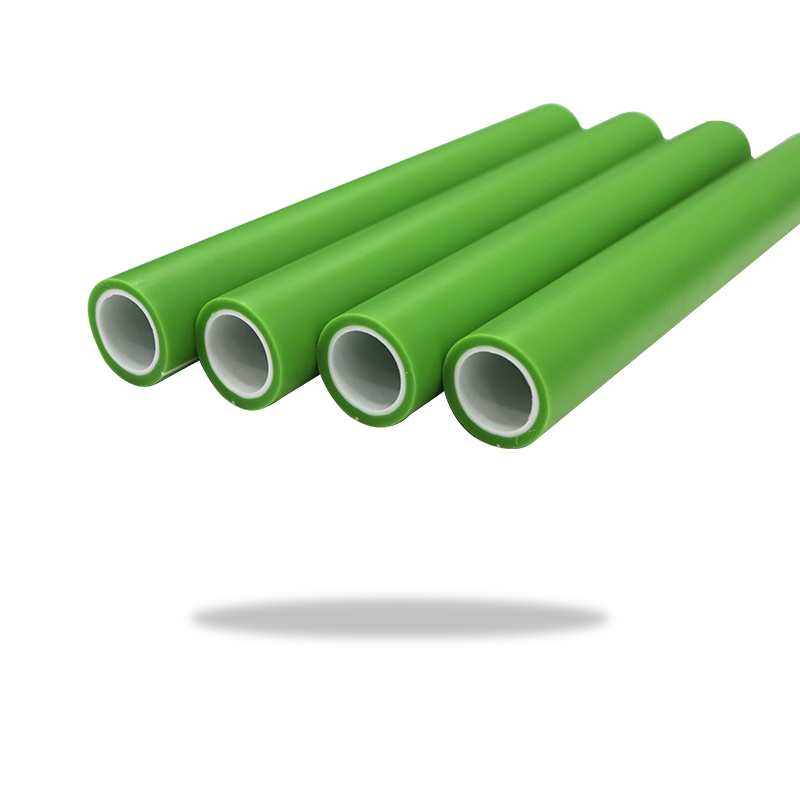
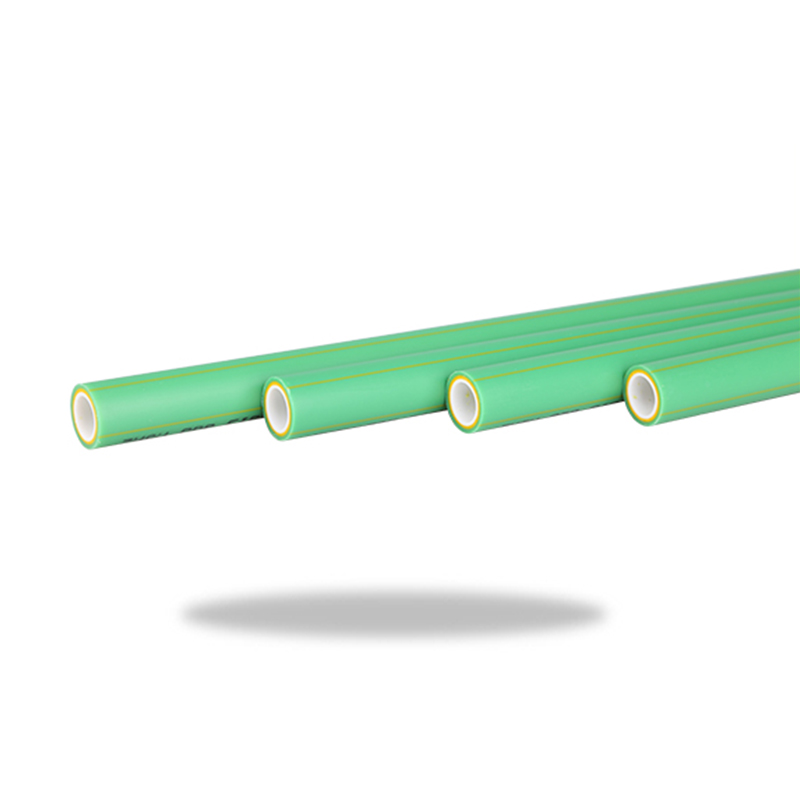
PPR pipes also come in specialty variants, including fiberglass-reinforced PPR (PPR-GF or PPR-C), which adds a middle layer of glass fiber to reduce thermal expansion — a critical advantage in long hot water runs where standard PPR can expand by up to 15 mm per meter over a 50°C temperature range.
Common Applications of PPR Pipe
PPR's combination of temperature resistance, chemical inertness, and fusion-welded leak-proof joints makes it suitable across a wide range of applications:
- Residential plumbing — Hot and cold water supply in apartments, villas, and houses. PPR's smooth bore prevents scale buildup and maintains water quality over time.
- Underfloor heating systems — PN20 or fiberglass-reinforced PPR handles the sustained low-temperature heat (typically 35–55°C) of radiant floor heating circuits.
- Industrial process piping — PPR resists a wide range of acids, alkalis, and salts, making it suitable for chemical transport within its temperature and pressure limits.
- Compressed air lines — PN20 and PN25 PPR is used in workshop and factory compressed air systems, typically in smaller diameters (20–63 mm).
- Solar water heating systems — Fiberglass-reinforced PPR (PPR-GF) is specifically used here due to its lower thermal expansion and ability to handle temperature spikes from solar collectors.
- Potable water mains — PPR is food-safe and does not leach chemicals into drinking water, meeting international potable water certifications including NSF 61 (North America) and KTW (Germany).
How PPR Pipes Are Joined: Heat Fusion Welding
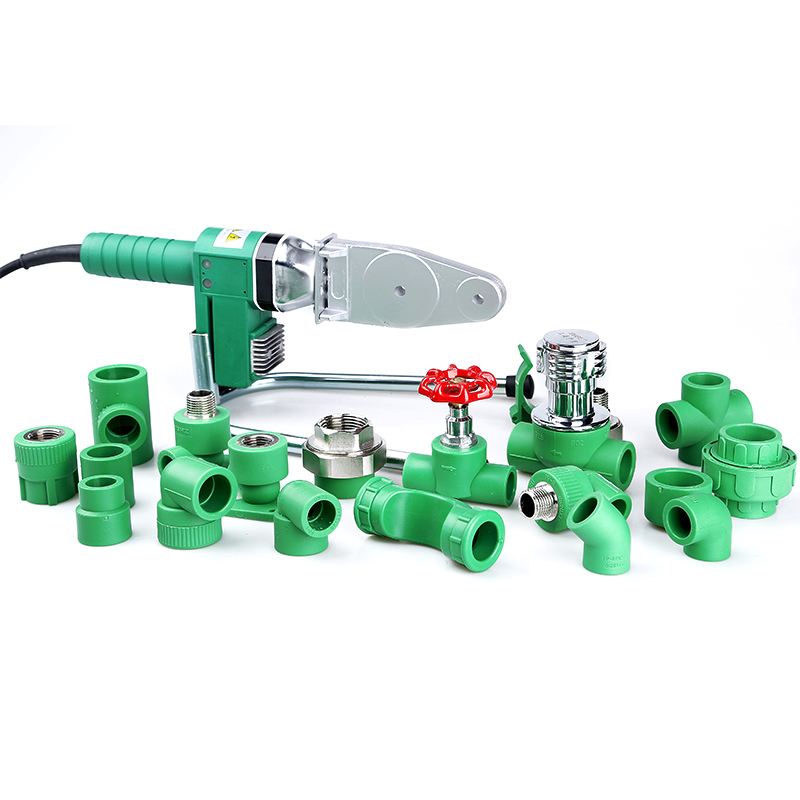
One of PPR pipe's most significant practical advantages is its jointing method. PPR uses socket fusion (polyfusion) welding, where both the pipe end and the fitting socket are simultaneously heated using a specialized welding tool with Teflon-coated dies, then pressed together to form a homogeneous bond.
This process creates a joint that is as strong as or stronger than the pipe itself — there are no adhesives, solvents, or mechanical clamps involved. When done correctly, a PPR fusion joint is permanently leak-proof and will not loosen over decades of thermal cycling.
Standard Fusion Welding Parameters
| Pipe Diameter (mm) | Heating Time (sec) | Joining Time (sec) | Cooling Time (min) |
|---|---|---|---|
| 20 | 5 | 4 | 2 |
| 25 | 7 | 4 | 2 |
| 32 | 8 | 6 | 4 |
| 40 | 12 | 6 | 4 |
| 63 | 24 | 8 | 6 |
The welding iron temperature should be set to 260°C (500°F) for standard PPR fusion. Over- or under-heating is the leading cause of joint failure — overheating degrades the material, while insufficient heat produces a cold joint that looks bonded but lacks structural integrity.
Limitations of PPR Pipe Worth Knowing Before You Specify
PPR is an excellent pipe material, but it has real limitations that matter in certain applications:
- UV sensitivity — Standard PPR degrades when exposed to direct sunlight over time. Outdoor installations require UV-stabilized PPR or protective insulation cladding.
- Thermal expansion — Standard PPR expands approximately 0.15 mm per meter per °C of temperature change. A 10-meter run of hot water pipe experiencing a 50°C temperature rise will expand by ~75 mm. Expansion loops or fiberglass-reinforced pipe must be used to manage this.
- Not suitable for steam or very high temperatures — PPR is not rated for steam lines or applications above 95°C. CPVC, copper, or stainless steel must be used in those cases.
- Larger diameter than copper — For the same flow capacity, PPR pipes have a slightly larger outer diameter than copper, which can be a factor in tight wall cavities or retrofits.
- Cannot be re-welded — Once a PPR fusion joint is made and cooled, it cannot be disassembled or repositioned. Mistakes require cutting out the section and replacing with new fittings.

 Email:
 Telephone:+86-21-57461561
 Phone:+86-18721379989


