


 简体中文
简体中文 English
 русский
 Español
 Français
 عربى
عربى Português
 日本語
日本語 italiano
 Nederlands
 Polskie
When a 40-hectare block loses pressure at its last sprinkler, the pipe is rarely the first suspect and often the real cause. For most field irrigation, the practical answer is a buried HDPE (PE100) mainline paired with PVC or LDPE laterals: HDPE where the soil moves, frost lifts the ground, or a line has to be pulled through a bore, and PVC where the layout is fixed, the ground is stable, and cost per metre decides the tender. Three numbers settle the choice: the chemistry of the water, the working pressure plus surge, and the flow required at the far end. Outside diameter, wall thickness expressed as SDR, and resin grade have to satisfy all three at once, and a line sized on price alone is the most common reason a system underperforms in its second season.
Content
- 1 Read the Water Before You Read the Catalogue
- 2 The Pipe Families You Will Actually Be Quoted
- 3 Diameter and Friction Loss Decide Whether the System Works
- 4 Match the Pipe to the Irrigation Method
- 5 Joining, Fittings, and Burial Depth
- 6 Pressure Rating, Surge, and Temperature Reality
- 7 What Separates a Thirty-Year Line From a Five-Year Repair
- 8 Commissioning and Maintenance
Read the Water Before You Read the Catalogue
A water analysis decides more than a second quotation does. Bore water, canal water, and treated effluent behave differently inside a pipe, and the differences appear first at joints, dead ends, and emitters. Ask for pH, chloride, hardness, suspended solids, and temperature range. If two sources are blended, test the blend, because the mixture can be more aggressive than either source alone.
- Chloride above roughly 300 mg/L against galvanised or mild steel: internal corrosion, usually concentrated at threaded joints and slow-moving sections.
- pH below 6.5 with acid injection for fertigation: PVC-U is generally comfortable, while polyethylene should be checked against the resin maker's chemical resistance table before ordering.
- Suspended solids above about 50 mg/L: filtration belongs downstream of the mainline, and the pipe still has to allow a flushing velocity near 0.5 m/s at the far ends.
- Water above 40 °C from a shallow pond or a long run of black pipe in full sun: the pressure rating falls, and a line sold as PN10 may only be safe at PN6.3 or lower.
The Pipe Families You Will Actually Be Quoted
Most irrigation tenders come down to four materials, plus hose for the portable end of the system. Each one wins in a different part of the field.
PVC-U
The default for buried mains and fixed sprinkler laterals. Stiff, inexpensive at larger diameters, and quick to join with solvent cement or ring-seal sockets. Cold weather makes it brittle to impact, and every bend, tee, or end cap on a pressurised line needs thrust restraint or a concrete block.
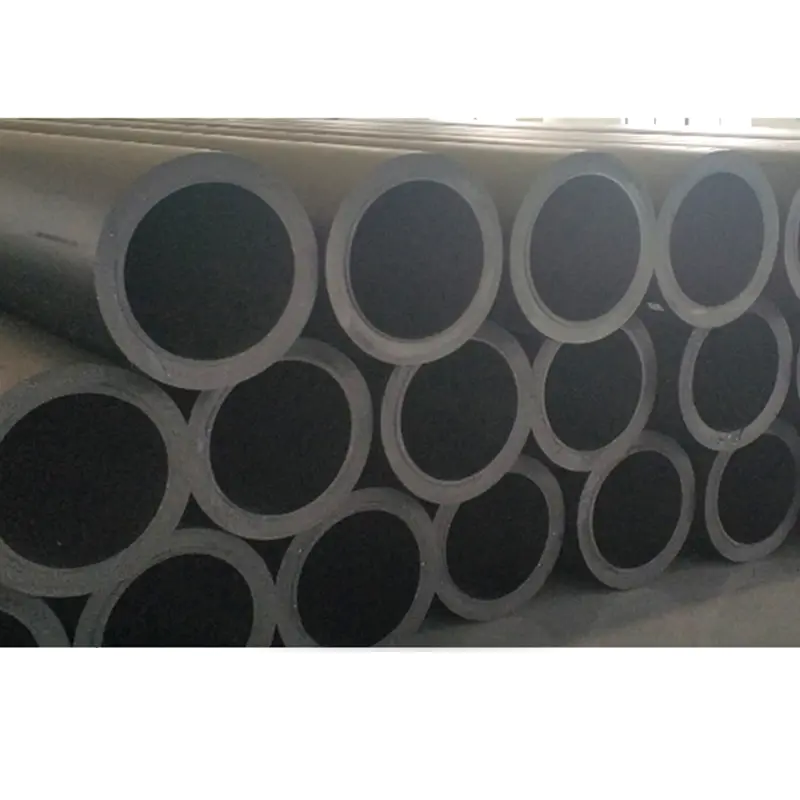
HDPE (PE100)
Flexible, supplied in coils, and joined by fusion, so it tolerates ground movement and frost and can be pulled under a road or hedge. Butt fusion is standard from 63 mm upwards, electrofusion suits tight trenches, and compression fittings cover repairs. Fusion quality depends on clean surfaces, correct heating times, and calibrated equipment.
LDPE and Soft Polyethylene
A lateral material rather than a mainline. Cheap, easy to relocate, and happy to be rolled up at the end of the season. Lower pressure ratings and a tendency to kink or soften in heat keep it in the lateral role.
Steel and Layflat Hose
Galvanised steel still earns its place at pump manifolds, risers, and valve assemblies where rigidity matters, but its interior roughens with corrosion and friction rises over the years. Layflat hose covers the portable sprinkler set and the seasonal pump line, and should never be left permanently buried.
| Material | Best field role | Typical joining | Main watch-out |
|---|---|---|---|
| PVC-U | Buried mains, fixed laterals | Solvent cement, ring seal | Brittle when cold, needs thrust restraint |
| HDPE PE100 | Buried mains, bores, moving ground | Butt fusion, electrofusion | Fusion parameters, temperature derating |
| LDPE | Above-ground and moveable laterals | Compression fittings | Lower pressure class, kinks in heat |
| Galvanised steel | Manifolds, risers, valve assemblies | Threaded, flanged | Corrosion, rising friction loss |
| Layflat hose | Portable sprinkler sets | Clamped couplings | Not for permanent burial |
Diameter and Friction Loss Decide Whether the System Works
Velocity targets keep a system quiet and efficient: roughly 1.0 to 1.5 m/s in a mainline, up to about 2.5 m/s in a lateral where cost forces a smaller pipe. Losses fall away quickly as diameter grows. Using a Hazen-Williams calculation with C = 140, which suits clean polyethylene, 10 m³/h through a 63 mm PE100 line of SDR17, with a bore near 56 mm, loses close to 2.7 m of head per 100 m, while the same flow through a 90 mm line of the same SDR loses under 0.5 m per 100 m.
That gap matters because head is what the pump pays for. Five hundred metres of the smaller line costs about 13.5 m of head; the larger line costs about 2.5 m. Over a season of pumping, the bigger pipe is often the cheaper decision even when the invoice suggests otherwise. Size for the peak-demand block rather than the average, then add emitter operating pressure, elevation gain, filter losses, and friction from lateral, sub-main, and mainline. On undulating ground, that total climbs faster than most budgets expect.
Match the Pipe to the Irrigation Method
Drip and micro-sprinkler systems run at low pressure, use narrow laterals, and demand strict filtration plus regular flushing, so buried PE100 mains with thin-wall polyethylene laterals are the usual combination. Solid-set and sprinkler blocks run at higher pressure and move large volumes per hectare, which makes mainline diameter the deciding factor. Furrow and flood irrigation tolerates a coarser approach, typically gated pipe with simple low-pressure controls, though it rewards accurate grading more than any other method. A farm often runs two of these systems on one source, and the mainline has to serve the highest demand without starving the rest.
Joining, Fittings, and Burial Depth
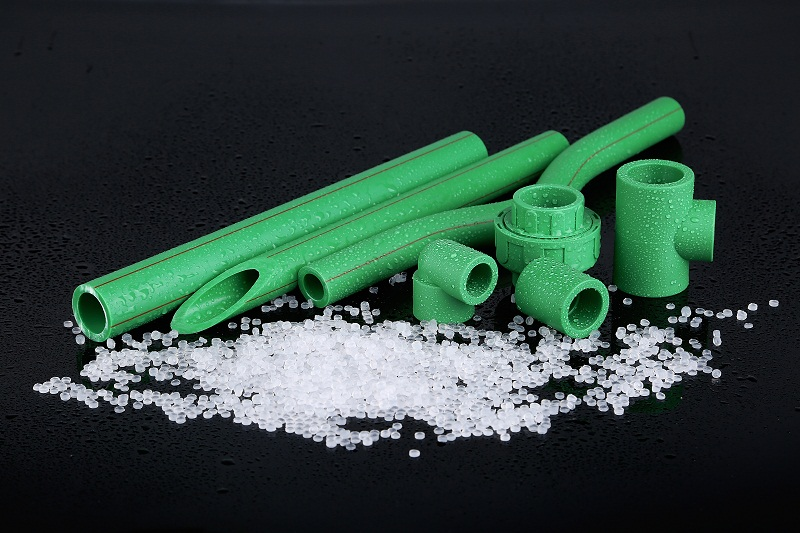
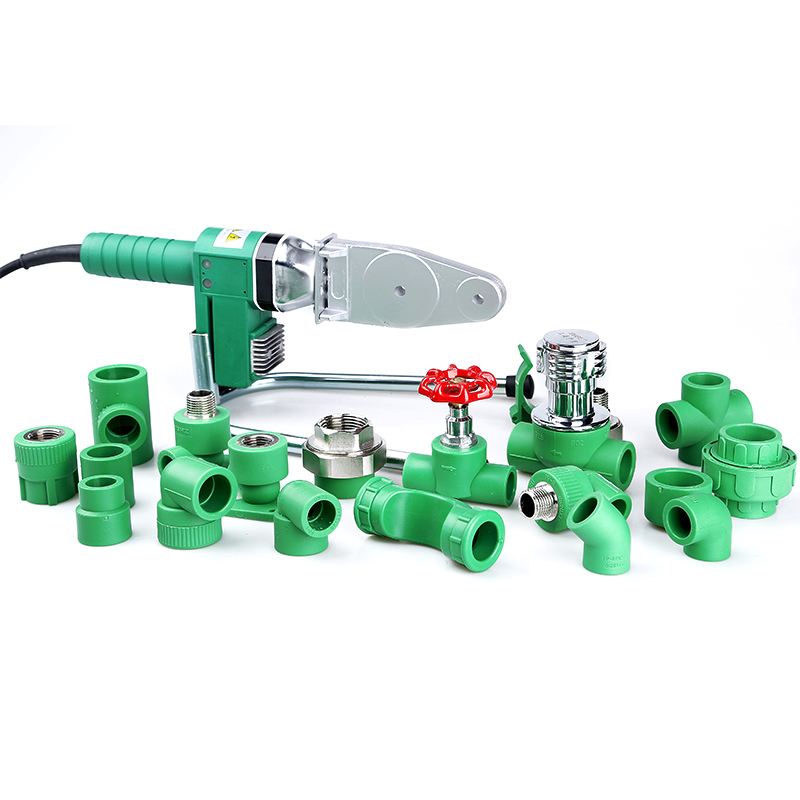
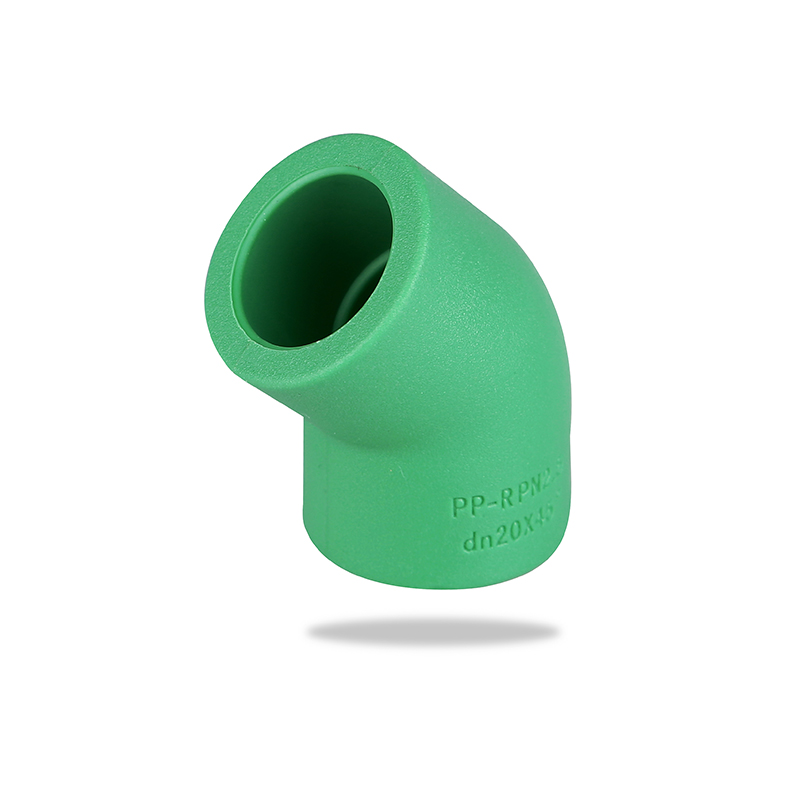
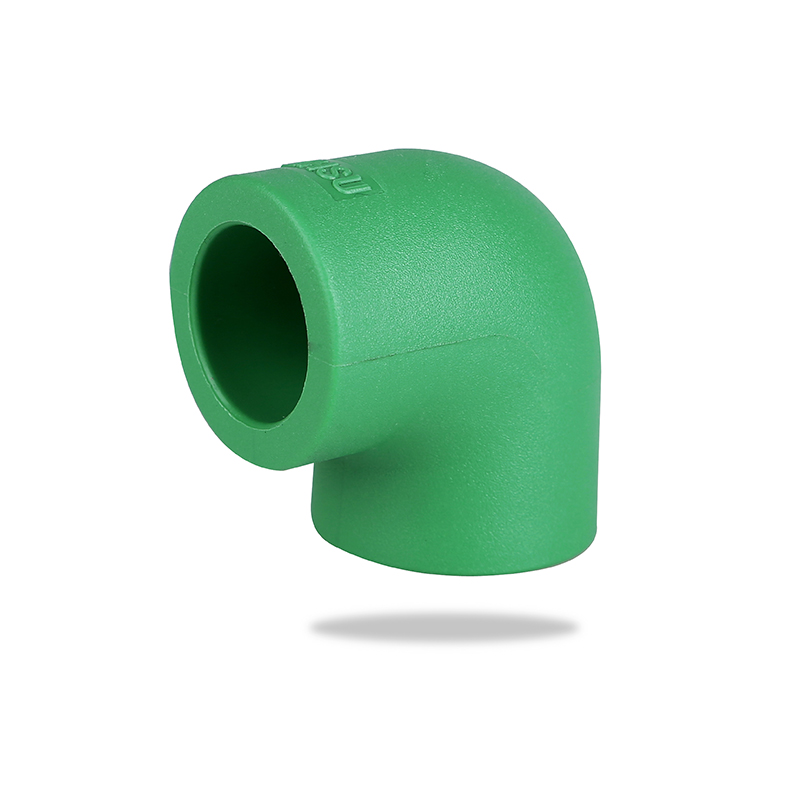
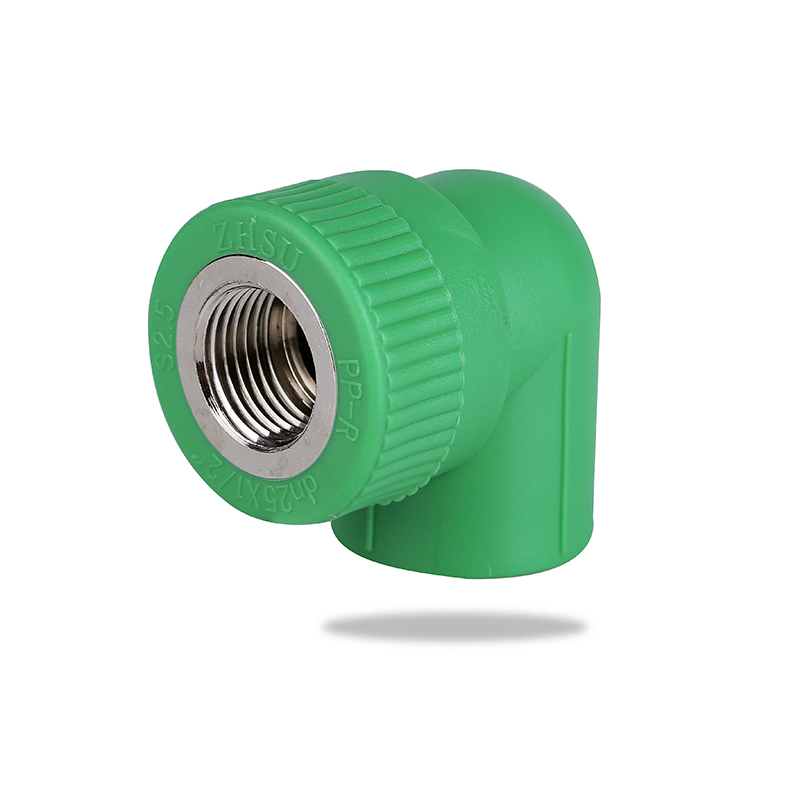
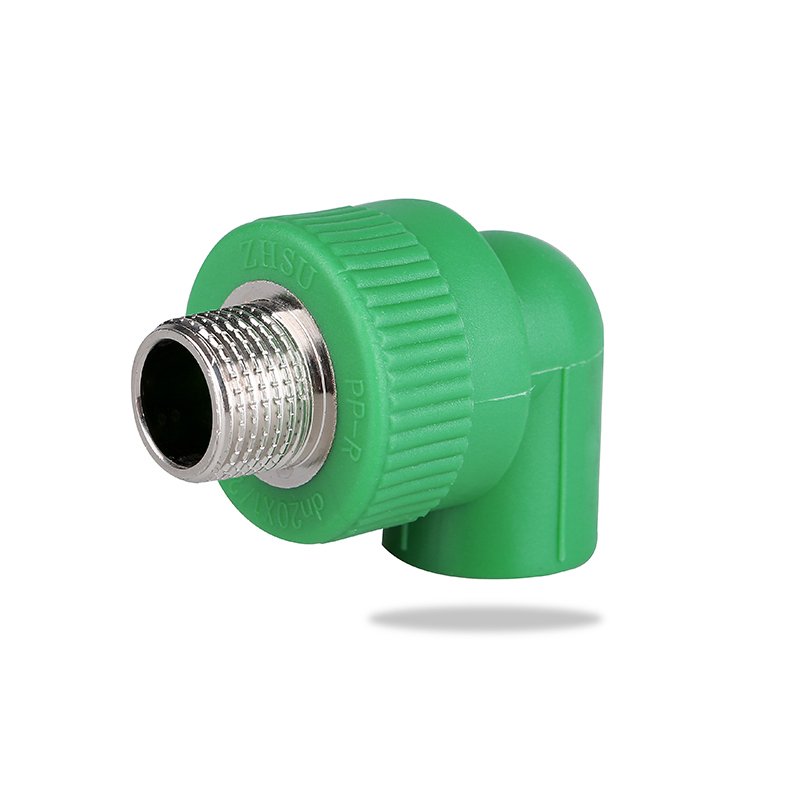
Fittings decide how long a line lasts. Elbows, tees, couplings, unions, caps, crosses, and valves should come from the same resin family and pressure class as the pipe. A PN16 valve on a PN10 mainline is fine; a PN6 fitting on the same line is a scheduled failure.
Burial depth follows the implement that will cross the field. Mainlines are usually laid 0.6 to 0.9 m down, below plough and subsoiler depth, bedded without sharp stones against the wall, and marked with a warning tape. Around 0.3 m of cover is enough for lines that stay clear of machinery. Thrust blocks belong behind tees, bends, and end caps on pressurised PVC, and valve chambers should drain so fittings are never sitting in water.
Pressure Rating, Surge, and Temperature Reality
A PN rating describes a pipe at 20 °C carrying water over a long test period. Three things erode it in the field.
- Temperature: both polyethylene and PVC derate as water warms, so follow the resin maker's curve rather than the figure printed on the wall.
- Surge: closing a valve quickly, or starting a pump into an empty line, can add two to three times the working head as a pressure wave. Slow-closing valves, air release points at high spots, and a start sequence that fills the mainline first are cheaper than buying a heavier pipe.
- Lifetime: a fifty-year rating assumes steady pressure at a steady temperature. A line that runs at half pressure for eight months a year will outlast one that sees peak head every afternoon.
What Separates a Thirty-Year Line From a Five-Year Repair
- Resin source: 100% virgin material with a declared grade, such as PE100 or PE100-RC for rocky or abrasive ground, behaves differently from compound blended heavily with regrind.
- Wall thickness and SDR: measure at several points along a coil. A wall that drifts under the SDR tolerance cuts the pressure rating quietly.
- Marking: material, standard, SDR or wall class, pressure rating, manufacturer, and production date should appear legibly and repeatedly along the pipe.
- UV protection: relevant for any pipe that spends its life above ground, where black polyethylene is the usual answer.
- Evidence: batch test reports from a laboratory with recognised accreditation, for example under CNAS, say more than a certificate on a website. Ask also whether coils can be supplied in continuous lengths that match the trench layout, since delivery speed only helps if the pipe arrives in the right lengths with matching fittings.
Commissioning and Maintenance
Commissioning is short and worth doing properly. Fill slowly, expel air at the highest points, then pressure test at 1.5 times the working pressure for about an hour with no emitters connected. Record static pressure and the flow at the far end; those two numbers become your baseline.
After that, maintenance is mostly observation. A gauge that reads slightly lower each month points to a leak, a partly closed valve, or a filter loading up. Flush laterals at the start and end of the season, drain above-ground lines before the first frost, and keep trench markers visible so a subsoiler does not find the mainline first.
Agriculture piping is not one product decision. Water chemistry sets the material, peak flow sets the diameter, ground conditions set the depth and joining method, and the fittings hold the whole assembly together. Get those four right and the pipe becomes the part of the irrigation system nobody has to think about again.
 Email:
 Telephone:+86-21-57461561
 Phone:+86-18721379989


