


 简体中文
 English
 русский
 Español
 Français
 عربى
 Português
 日本語
 italiano
 Nederlands
 Polskie

Content
The Short Answer on 45 vs 90 Degree PPR Elbows
Choose a 90 degree PPR elbow when the pipe has to turn a true right angle in the least possible space. Choose a 45 degree elbow when the line only needs to shift direction gently, or when you want less resistance along a run.
Both angles use the same polypropylene random copolymer, join by heat fusion and cover the same 20–160 mm size range at PN 2.5 MPa. The decision is about layout, joint count and installation room, not about product quality.
Key Differences at a Glance
The table below sets the two angles side by side for a hot-melt PPR system.
| Feature | 45 Degree Elbow | 90 Degree Elbow |
|---|---|---|
| Direction change | Gentle diagonal turn | Right-angle turn |
| Flow resistance | Lower, smoother turn | Higher, sharper turn |
| Space along the run | Needs more length to reach a full offset | Compact corner |
| Fused joints for a full right-angle turn | Two elbows plus a short pipe piece, four joints | One elbow, two joints |
| Typical use | Offsets, gradual bends, detours around obstacles | Corners, risers, wall turns |
| Size and pressure (ZHSU range) | 20–160 mm, PN 2.5 MPa | 20–160 mm, PN 2.5 MPa |
On resistance, published comparisons disagree on exact loss coefficients, but they agree on the direction: a 45 degree elbow is commonly cited as producing roughly half the loss of a 90 degree elbow, or less.

When a 90 Degree Elbow Is the Better Choice
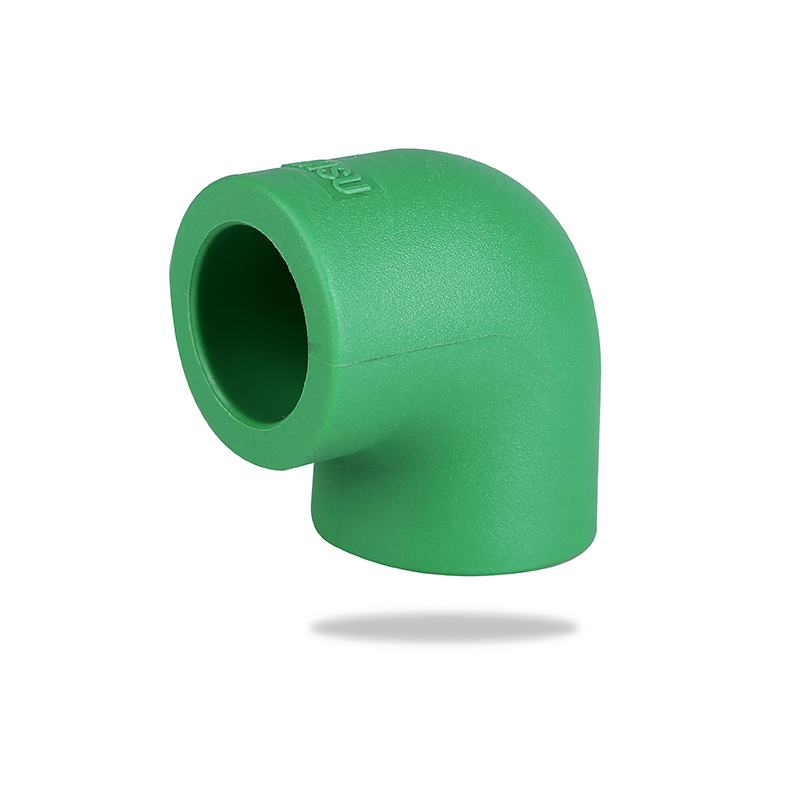
A 90 degree PPR elbow for right-angle corners is the default fitting wherever pipe meets a wall corner, drops from a ceiling run, or turns from a vertical riser into a horizontal branch. It does the job with a single fitting and two fused joints.
- Corners behind walls, under fixtures and around equipment
- Risers that connect to horizontal branches
- Short runs where hydraulic loss is not a concern
Space is where the 90 degree elbow earns its place. Fewer fittings mean fewer joints and less room taken. If the corner is tight, a short-radius pattern saves space, although it adds flow resistance. For practical tips on installing a 90 degree elbow in a narrow space, including compact fusion tools and prefabrication outside the cavity, see our earlier guide.
When a 45 Degree Elbow Is the Better Choice
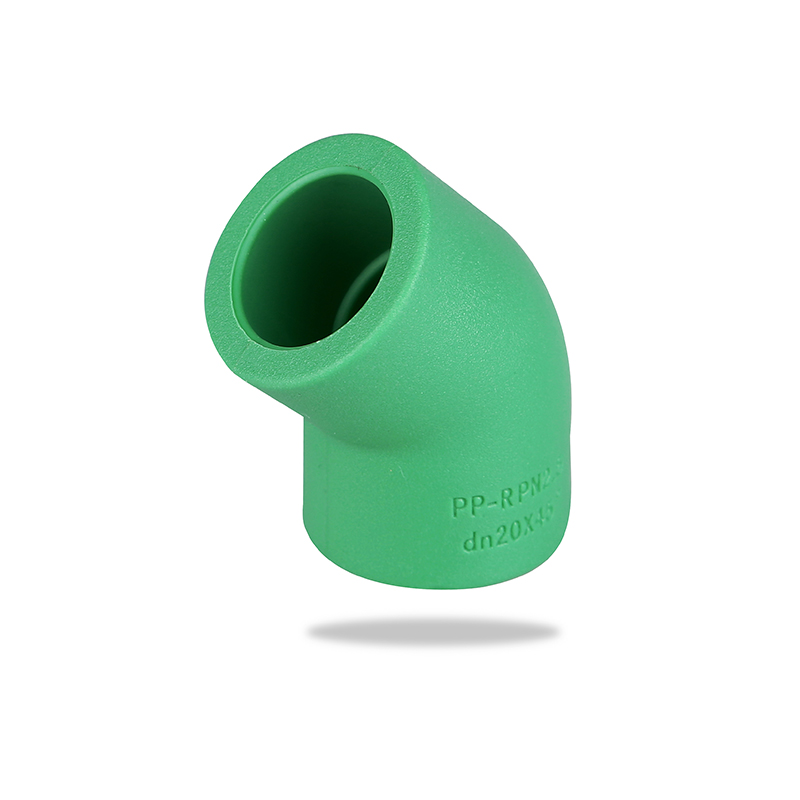
A 45 degree PPR elbow for gradual direction changes suits lines that need to ease around a beam, a duct or another pipe rather than turn a hard corner. It is also useful where a tighter turn simply does not fit the available geometry.
Long runs with several direction changes are the other strong case. Every sharp turn adds resistance, and stacking them along one line adds up. Replacing some of those turns with gentler 45 degree bends keeps the water moving more smoothly and reduces the load on the system.
- Offsets around beams, ducts and other services
- Gradual bends along long hot or cold water runs
- Layouts where a right-angle fitting would force an awkward detour
Two 45 Degree Elbows or One 90 Degree Elbow
Two 45 degree elbows can make a right-angle turn that is gentler on the flow than a single 90 degree fitting. The price is paid in joints and length.
Socket-fusion elbows have a socket at each end, so a pair needs a short piece of pipe between them. That means four fused joints instead of two, plus extra length along the run. Each added joint is another heating cycle to control and another point to check for leaks.
As a working rule, use the single 90 degree elbow for ordinary corners and keep the 45 degree pair for places where lower resistance matters, such as a long line with several turns, and where there is room to spare.
Installation Points for Hot-Melt Joints
The fusion process is the same for both angles, and the same discipline applies. Heat the pipe end and the elbow socket at about 260°C ± 10°C, adjust the heating time to the pipe diameter, then push the parts together without twisting and hold them until the joint sets.
Elbows give you only one chance at alignment. Mark the intended direction on the pipe and the fitting before heating, because the elbow cannot be rotated once fusion starts. This matters most with 45 degree pairs, where a small angular error shifts the pipe off its target line.
Two further points apply to both angles. Leave room for thermal expansion, since PPR lengthens when hot water passes through it, and support the pipe close to each elbow so it does not carry bending stress. In tight spaces, preassemble the section outside the cavity and fit it as one unit.
How to Choose Before You Order
Work through these checks in order before placing an order.
- Measure the available space and confirm the real turning angle on site.
- Count the direction changes on the run and decide where lower resistance is worth extra fittings.
- Set your joint budget, remembering that a 45 degree pair adds two fused joints over a single 90 degree elbow.
- Confirm size and rating. Both elbows are available from 20 to 160 mm at PN 2.5 MPa and are made to DIN 8077, DIN 8078 and ISO 15874.
- Plan expansion allowance and pipe supports around each elbow.
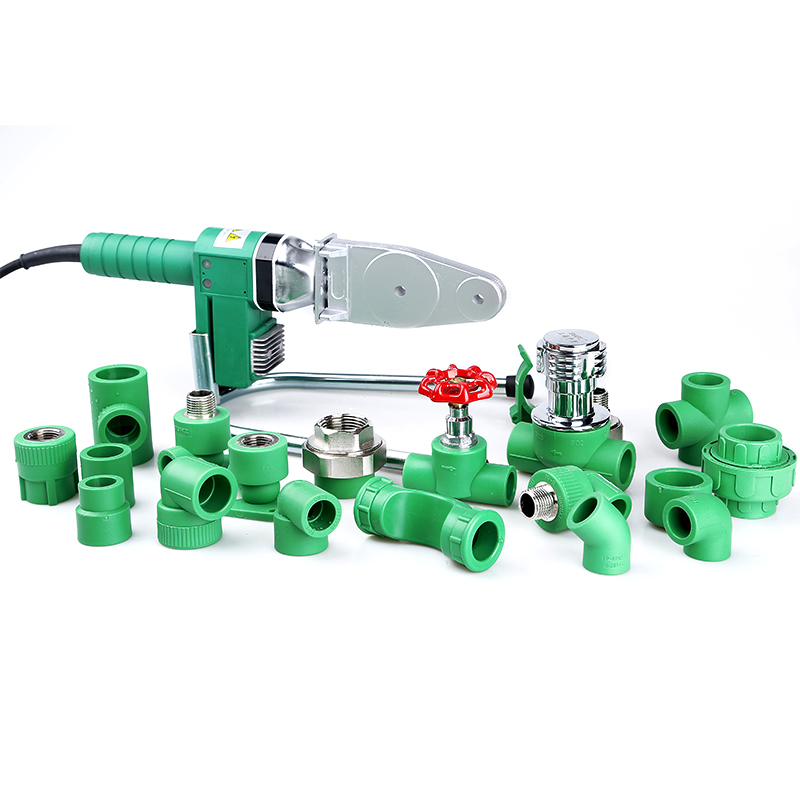
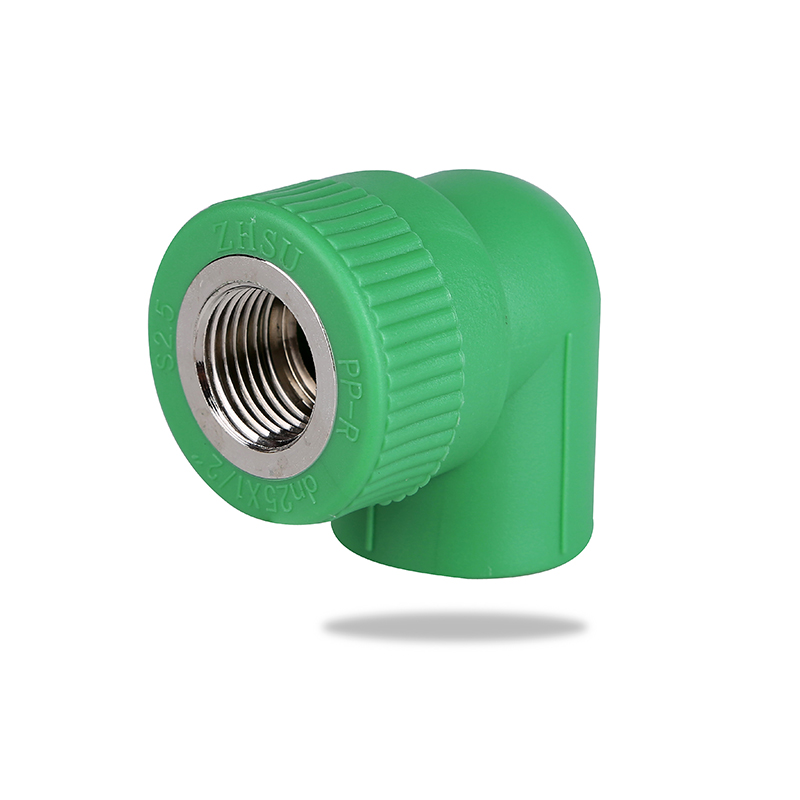
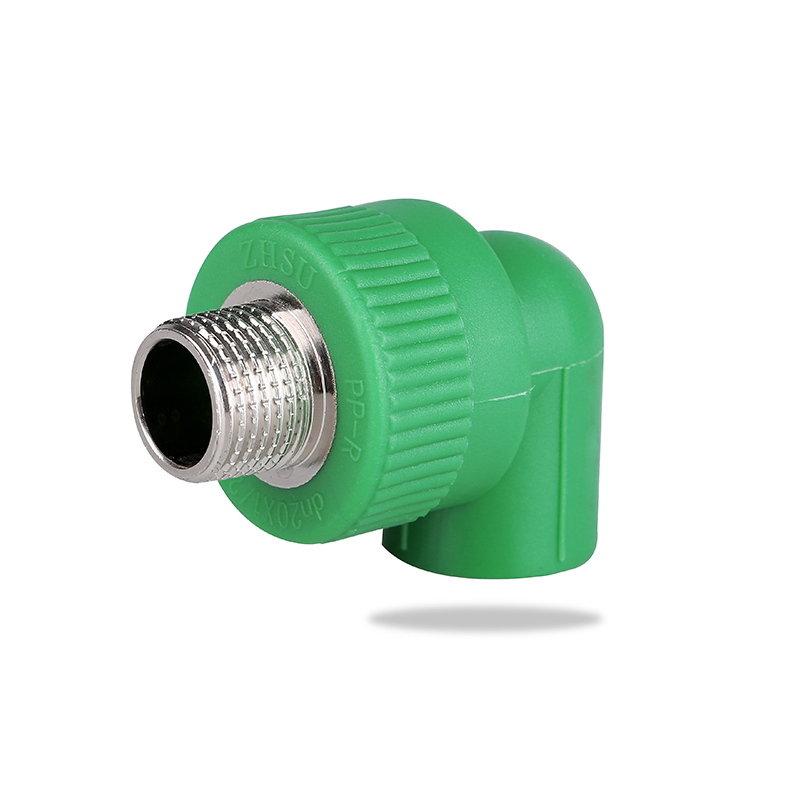
For the wider product range, including threaded and reducing types, browse the full range of PPR elbow types and sizes. For background on material behavior, our article on the characteristics and typical applications of PPR elbows covers corrosion resistance, temperature performance and installation.
On the standards side, the general requirements for polypropylene hot and cold water systems are set out in ISO 15874-1 requirements for polypropylene hot and cold water piping systems. One logistics detail is also worth noting: the two elbows are packed differently. A carton of 20 mm elbows holds 1,200 pieces at 45 degrees and 1,000 pieces at 90 degrees, so check carton quantities when comparing orders.
 Email:
 Telephone:+86-21-57461561
 Phone:+86-18721379989


